Every row up to this point followed the same logic: one consonant, five vowels (or three, for や, ゆ, よ). This last group breaks that shape entirely. わ is the only survivor of what was once a full W-row. を is a character with exactly one job in the entire language. And ん isn't a consonant-plus-vowel syllable at all, it's the only standalone consonant sound hiragana has.
These three don't behave like the 43 characters before them, and once you know why, they stop being exceptions to memorize and start being three small, logical facts.
わ (wa)
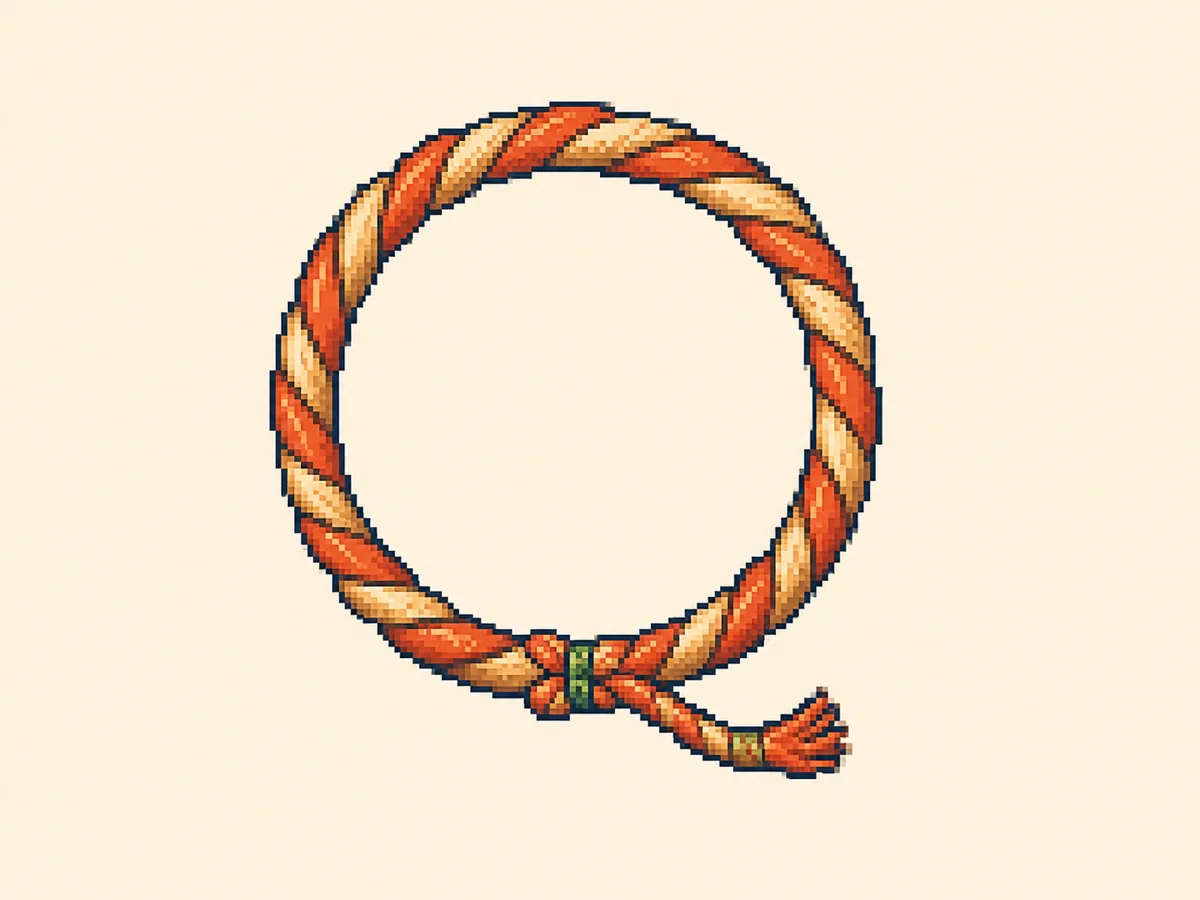
わ (wa)
わ has a vertical stroke and a large loop, like a wreath tied into a ring with one loose end trailing. "Wa" as in the sound of surprise or delight, "wow."
Sound: "w" plus the "ah" from あ. Historically there was a full W-row (wa, wi, wu, we, wo), but only わ survived into modern spoken use as a regular syllable. The others either merged into the vowel sounds or, in を's case, survived for one specific grammatical job only.
わ, れ (from the R-row), and な (from the N-row) are the three-way tangle flagged twice already in this series. All three share a vertical-stroke-plus-curl structure. Line all three up now:
- な — the curl sits tight and low, closest to the main stroke
- れ — the curl kicks further out and curves down more sharply
- わ — the loop is largest and rounds all the way into a closed ring
Size and closure of the loop is the whole story. Small and tight is な, a sharper kick-out is れ, a full closed ring is わ.
を (o, written "wo")
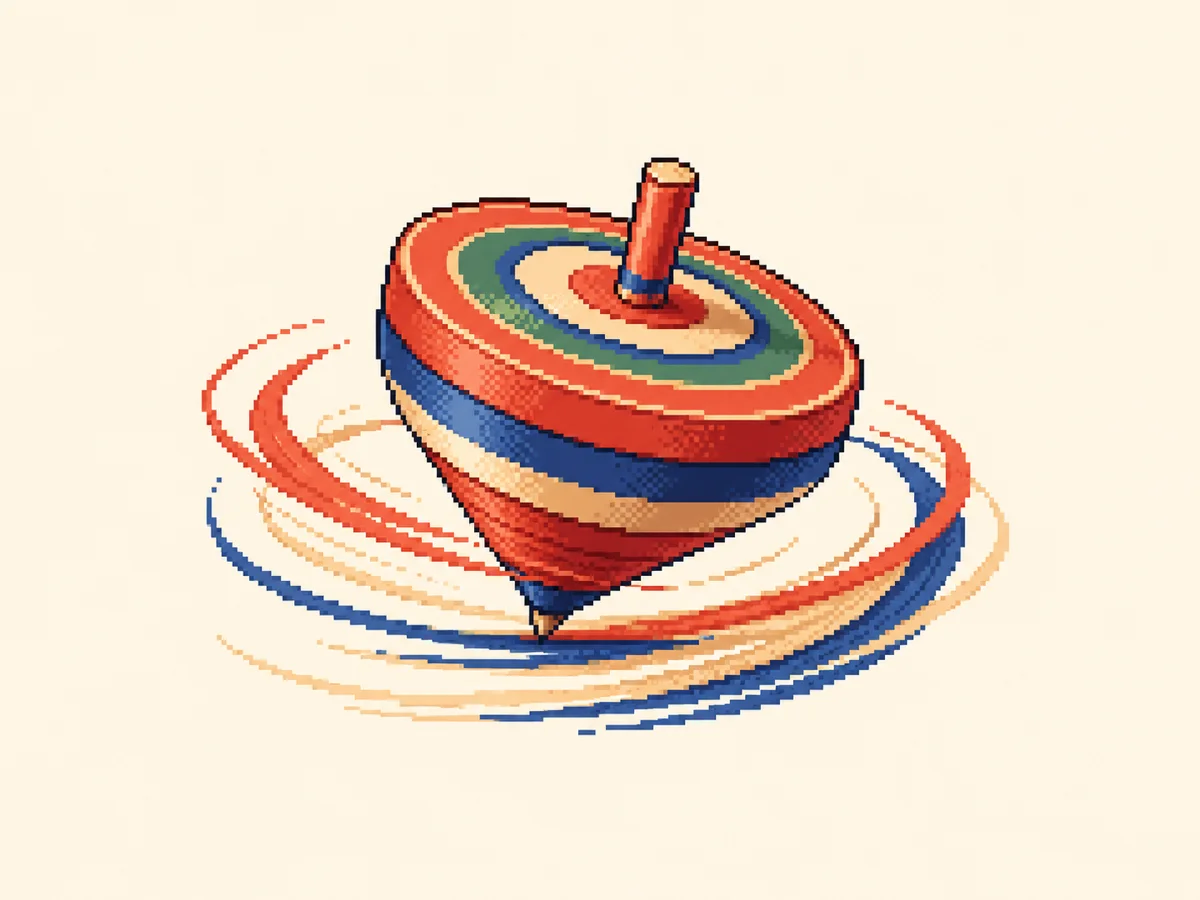
を (wo)
を is visually one of the busier characters in hiragana, several curved strokes wrapping around each other, like a spinning top caught mid-spin with a blur of motion at its base.
Here's the fact that actually matters more than the shape: を is pronounced exactly like お, not like "wo." The romaji spelling "wo" is a historical leftover, not a pronunciation guide. In modern spoken Japanese there is no audible difference between お and を.
So why does it exist at all, if it sounds identical to a character you already know? Because を has exactly one job: marking the direct object of a sentence, the thing an action is being done to. You'll never see を used to spell a word the way お is, and you'll never see it anywhere except right after the noun receiving an action. For example, in 本を読む (hon wo yomu, "read a book"), を sits right after 本 (hon, book) to mark it as the thing being read.
That single, narrow role is exactly why を doesn't need its own mnemonic tied to sound, since the sound is just お. What you actually need to remember is the job: を equals "this noun is the direct object."
ん (n)

ん (n)
ん is a single small curved stroke, simple and self-contained, like a comma or a check mark standing on its own.
This is the one character in hiragana that isn't a consonant riding on a vowel. It's a standalone nasal sound, close to the "n" in "button" said without finishing the vowel, or the "ng" in "song" depending on what follows it. Two rules make it easy to use correctly:
1. ん never starts a word. It only ever follows another character.
2. ん takes up a full beat of rhythm on its own, the same length as any other character, even though it's just one sound.
That second point matters for words like ほん (hon, book), which is two full beats, "ho" and "n," not one syllable "hon" said quickly the way an English speaker would default to.
Reading real words
| Word | Reading | Meaning |
|---|---|---|
| わたし | watashi | I, me |
| ほん | hon | book |
| みかん | mikan | tangerine, mandarin orange |
| えん | en | yen, the currency |
| ほんをよむ | hon wo yomu | to read a book, showing を doing its one job |
| わに | wani | crocodile |
| おんな | onna | woman |
| こんばん | konban | tonight |
本を読む is worth reading slowly. You now have every character in it: ほ, ん, を, よ, む, each one from an article somewhere earlier in this series.
The full 46 characters, done
If you've worked through every article in this series in order, vowels through here, you now know all 46 basic hiragana characters, not as a chart you've memorized by position, but as sounds and shapes you can actually recognize out of order, under time pressure, mixed with distractors. That's a meaningfully different skill than reciting a chart from the top, and it's the one that actually transfers to reading real Japanese.
From here, two things are left to complete the full hiragana system: dakuten and handakuten marks that turn か into が or は into ぱ, covered in Diacritical Marks Guide, and the contracted sounds built from small ゃ, ゅ, ょ attached to characters like き and し, covered in Contracted Sounds Explained. Both build directly on what you've just finished, so neither should take as long as the main 46 did.
Where to go from here
Once dakuten and contracted sounds are solid, Understanding Katakana is the next writing system, sharing the same underlying sound structure you've just spent this whole series learning, just with different shapes attached to it. For a refresher on the overall timeline and study sequence, Getting Started with Hiragana is worth rereading now that you've actually lived through it. And Hirakata's Study mode has わ, を, and ん ready to drill on their own before you fold them back into a full run-through of all 46.