I remember the exact moment hiragana stopped feeling like abstract squiggles. I was on a train in Osaka, half asleep, and I looked up at an ad with the word あい (ai, love) printed in huge letters. I read it. Not sounded it out, not squinted at it. Read it, the way you read a word in your own language. That took about three weeks of study to get to, and it started with five characters: あ, い, う, え, お.
Every hiragana syllable in the writing system is built on these five vowel sounds. Learn them cold and every other row (か, さ, た, な...) is just that same vowel with a consonant stuck in front. Get the vowels wrong at the start and that confusion compounds through all 46 characters. So it's worth spending real time here, more than most guides suggest.
Why vowels come first
Japanese has exactly five vowel sounds, and they never change. That's the biggest difference from English, where "a" sounds different in "cat," "cake," "father," and "about." In Japanese, あ is always ah, い is always ee, and so on. Once you lock in these five sounds, you've locked in the pronunciation of every single hiragana and katakana character that exists, because they're all vowel-based or consonant-plus-vowel combinations.
Here's the full set with the audio so you can hear the real pronunciation rather than guess from an English approximation:
あ (a) — "ah" as in father
あ (a)

あ is the character most people struggle with first, because it has three strokes that don't obviously connect into anything. The mnemonic that worked for me: it's a samurai mid-draw, the blade snapping up out of the sheath in one motion, shouting "AH!" as the cut lands. The loop at the bottom is the sheath, swinging loose after the draw.
Sound: identical to the "a" in "father" or "spa." Not the "a" in "cat," which doesn't exist in Japanese at all.
い (i) — "ee" as in see
い (i)
This is the easiest character in the entire hiragana set. Two short vertical strokes, nothing to confuse it with. Think of it as the English letter "i" written twice, side by side, both dotless.
Sound: "ee" as in "see" or "tree," never the short "i" in "sit."
う (u) — "oo" as in food (but shorter)
う (u)
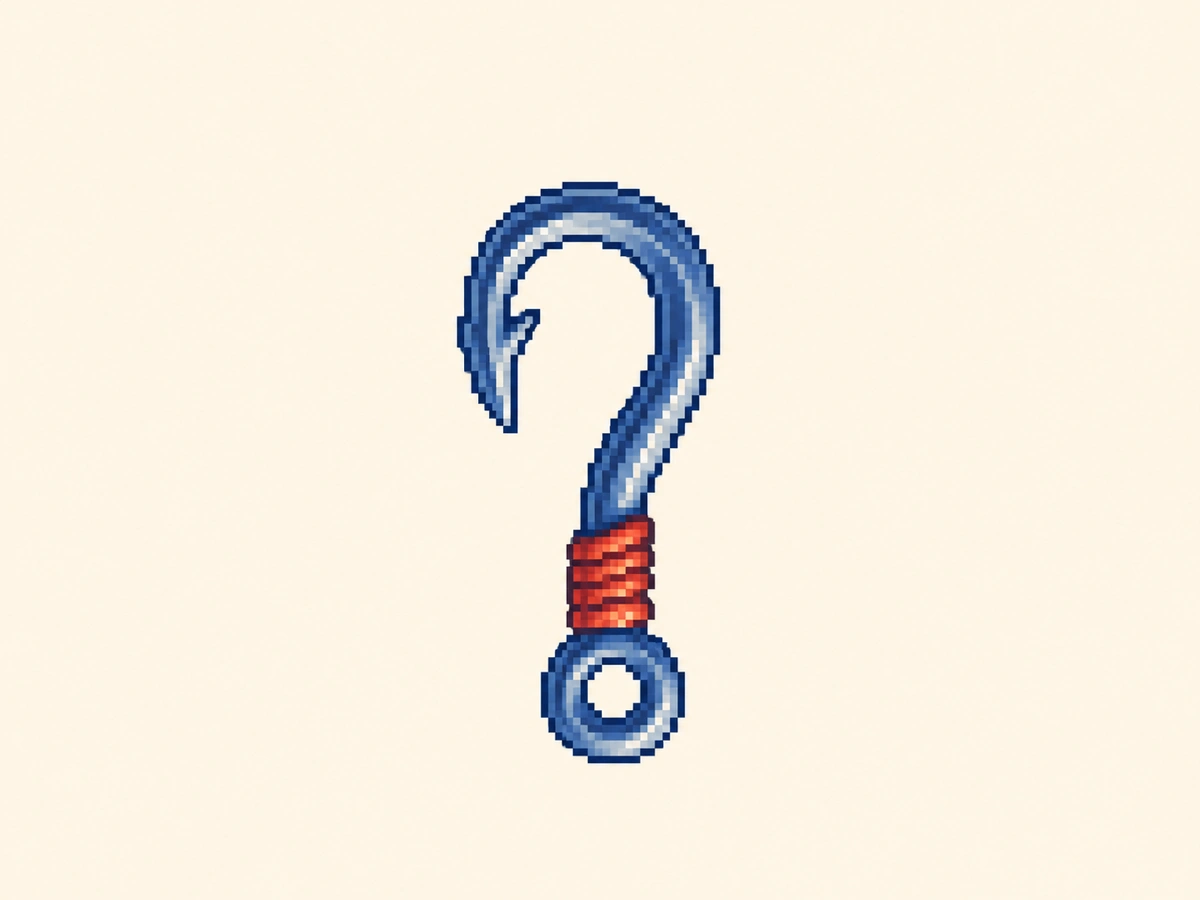
う looks like a hook or a small wave. I picture it as a fishhook: you say "ooh" when something catches your line. The short stroke at the top is the hook's eye, the curve sweeping around and down to the left is the point.
Sound: close to the "oo" in "food," but shorter and less rounded. Japanese speakers barely round their lips for this sound, which is why it can sound clipped to English ears at first.
え (e) — "eh" as in bed
え (e)

え has a bit more visual complexity, two strokes that combine into something like a person in profile with one eyebrow raised, saying "eh?" in surprise. That's the image I use, and it's stuck for over a decade.
Sound: "eh" as in "bed" or "pet." Short and flat, no diphthong the way English "ay" sounds glide.
お (o) — "oh" as in go
お (o)
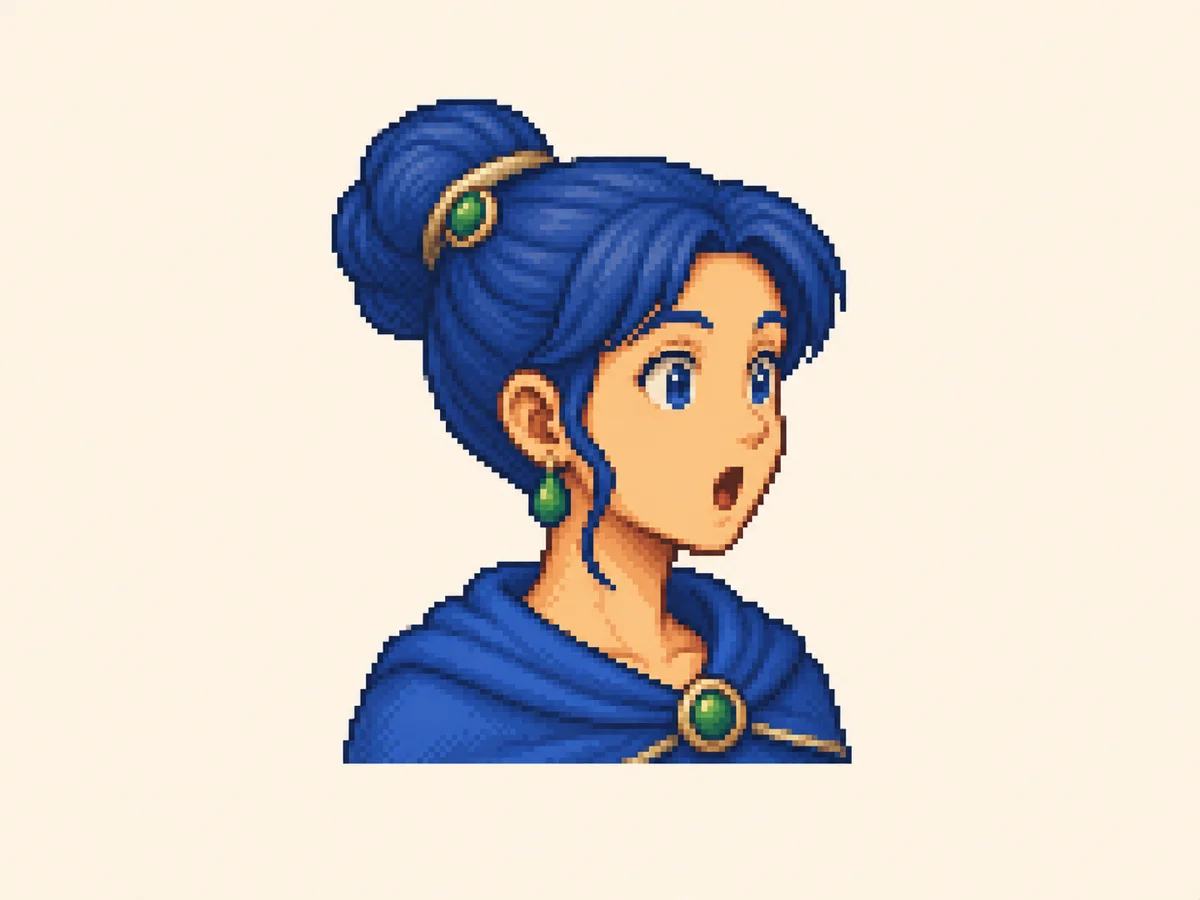
お has three strokes, like あ, and it's the one most learners mix up with あ early on, since both are built from a crossbar, a vertical, and a big looping stroke. My mnemonic: a woman with her hair styled up, one small curl escaping at the bottom, mouth rounded into an "oh." The small separate stroke at the upper right is that stray curl, which is exactly the detail that distinguishes it from あ.
Sound: "oh" as in "go" or "boat," but again shorter and more clipped than the English glide.
あ vs お: the one pairing that actually trips people up
Among the five vowels there's really only one confusing pair: あ and お. Both have a similar tangle of strokes: a crossbar, a vertical, and a big looping stroke. The reliable difference: お has a small separate dot at the upper right that doesn't connect to anything, like a comma floating off to the side. あ has no dot.
If you keep flipping these two, don't move on until you can write both from memory five times in a row without checking. This is exactly the kind of pair the Review mode in Hirakata is built for: it puts confusable characters side by side in a grid so the difference becomes visual rather than something you have to consciously recall.
Reading real words with just five characters
Here's what makes the vowels worth the extra attention: with only these five characters, you can already read real Japanese words, not textbook filler.
| Word | Reading | Meaning |
|---|---|---|
| あい | ai | love |
| いいえ | iie | no |
| うえ | ue | up, above |
| あお | ao | blue |
| おい | oi | nephew |
Notice something: every one of these words is built entirely from vowel-only syllables, no consonants at all. That's not a coincidence I constructed for this list, that's genuinely how much of the core Japanese vocabulary works. Vowel combinations carry more of the language than most beginners expect.
Try reading each of those five words out loud before you look at the romaji. If you can, the vowels have actually landed, not just been memorized as shapes.
A quick note on long vowels
Once you're comfortable with the five base vowels, you'll start seeing them stacked, like ああ or おう. A doubled vowel or an う following an お row character usually means "hold this sound longer," not "say it twice." ああ isn't "ah-ah," it's one long "aaah." This matters for words like おかあさん (okaasan, mother) versus おかさん, which isn't a word at all. You don't need to master this now, just recognize it's coming.
Practice before you move to the next row
Before moving on to か, き, く, け, こ, make sure you can do all of the following without hesitation:
- Write all five vowels from memory, in order
- Recognize all five out of order, mixed with distractor shapes
- Say the correct sound out loud when you see the character, using the audio above to check yourself
- Read all five example words above without sounding them out letter by letter
If any of that feels shaky, spend one more day here. The K-row builds directly on top of these five sounds (か is just "k" plus あ), so vowel confusion here becomes consonant-row confusion later, and that's a much harder thing to untangle after the fact.
Where to go from here
To practise writing the vowels, the hiragana vowels stroke order page animates every character stroke by stroke and lets you trace each one, with a check on the order and direction of every stroke.
Once the vowels are solid, the K-row is the natural next step, since every character in it is just one of these five vowel sounds with a "k" in front. If you want the full-picture study plan across all 46 characters first, Getting Started with Hiragana covers sequencing and timeline. And when you're ready to drill these five for real, Hirakata's Study and Match modes have them ready to go.