The K-row is the first place hiragana study actually starts to feel like a system instead of a pile of shapes to memorize one by one. Every character here is just the "k" sound plus one of the five vowels you already know: か is k + あ, き is k + い, and so on. If the vowels from the previous article are solid, you already know four-fifths of what you need for every character below.
I treat the K-row as the real test of whether vowel study worked. If you can hear "ka" and immediately think "k, then the あ sound," the system is clicking. If you're re-memorizing five brand new sounds from scratch, go back and drill the vowels first.
Why か doesn't sound like English "k"
One detail worth fixing before it becomes a habit: Japanese か is not the same "k" as English "kite" or "cat." English speakers aspirate that sound, a small puff of air right after the consonant. Hold a piece of paper an inch from your mouth and say "kite": it flutters. Say か with that same puff and a Japanese listener will still hear か, just with a noticeably English accent.
Japanese k is unaspirated, closer to the "k" buried inside English "school" or "ski," where the s in front absorbs the puff of air. Say "school" slowly and isolate just the k in the middle, no paper flutter there. That flatter sound is か. It's a small adjustment, but it's the difference between an accent that reads as deliberate and one that reads as still thinking in English phonetics.
か (ka)
か (ka)
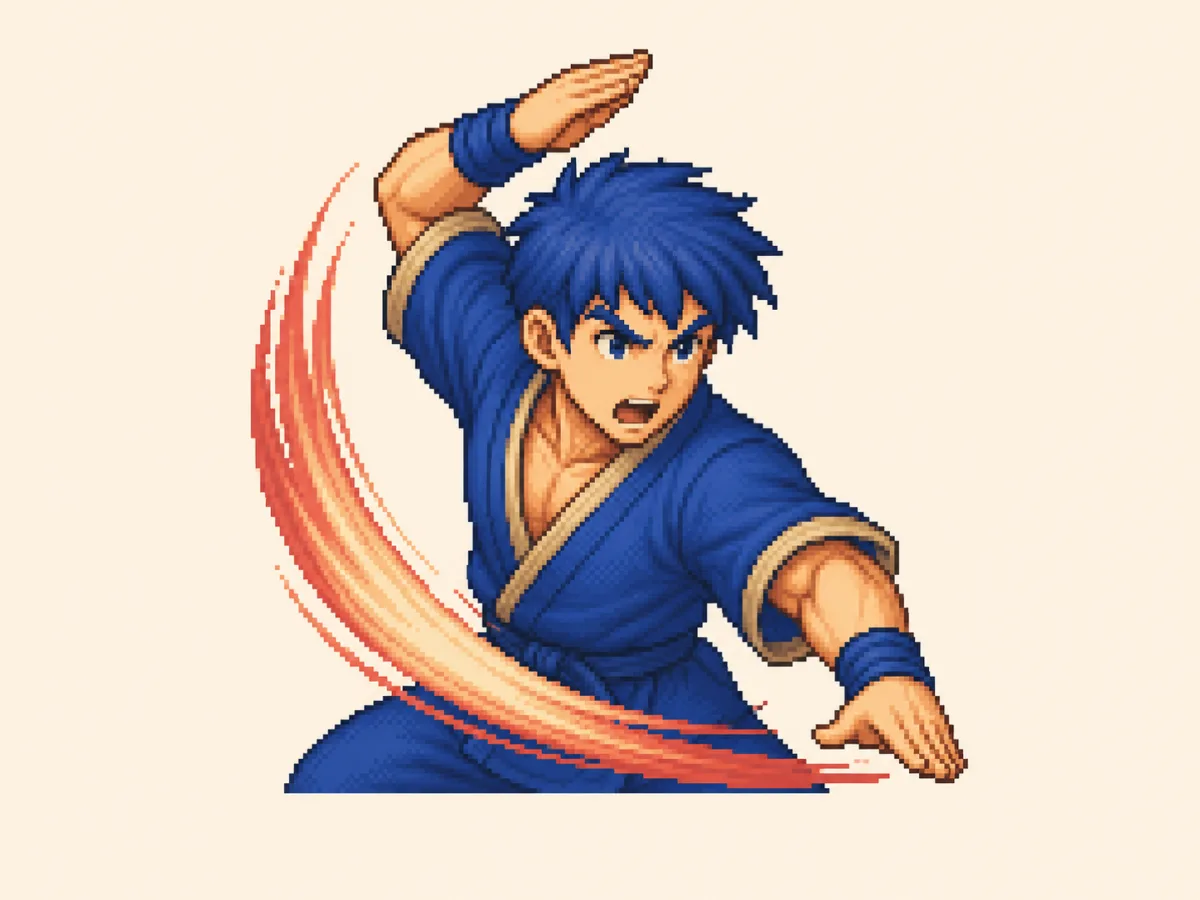
か has a long vertical stroke with a curved swipe crossing through it, like someone winding up for a karate chop. "Ka-POW." The curve is the arm swinging through, the short stroke off to the right is the spark where the chop lands.
Sound: "k" plus the "ah" from あ. Not "kah" like the English word "car," a touch shorter and cleaner.
き (ki)
き (ki)
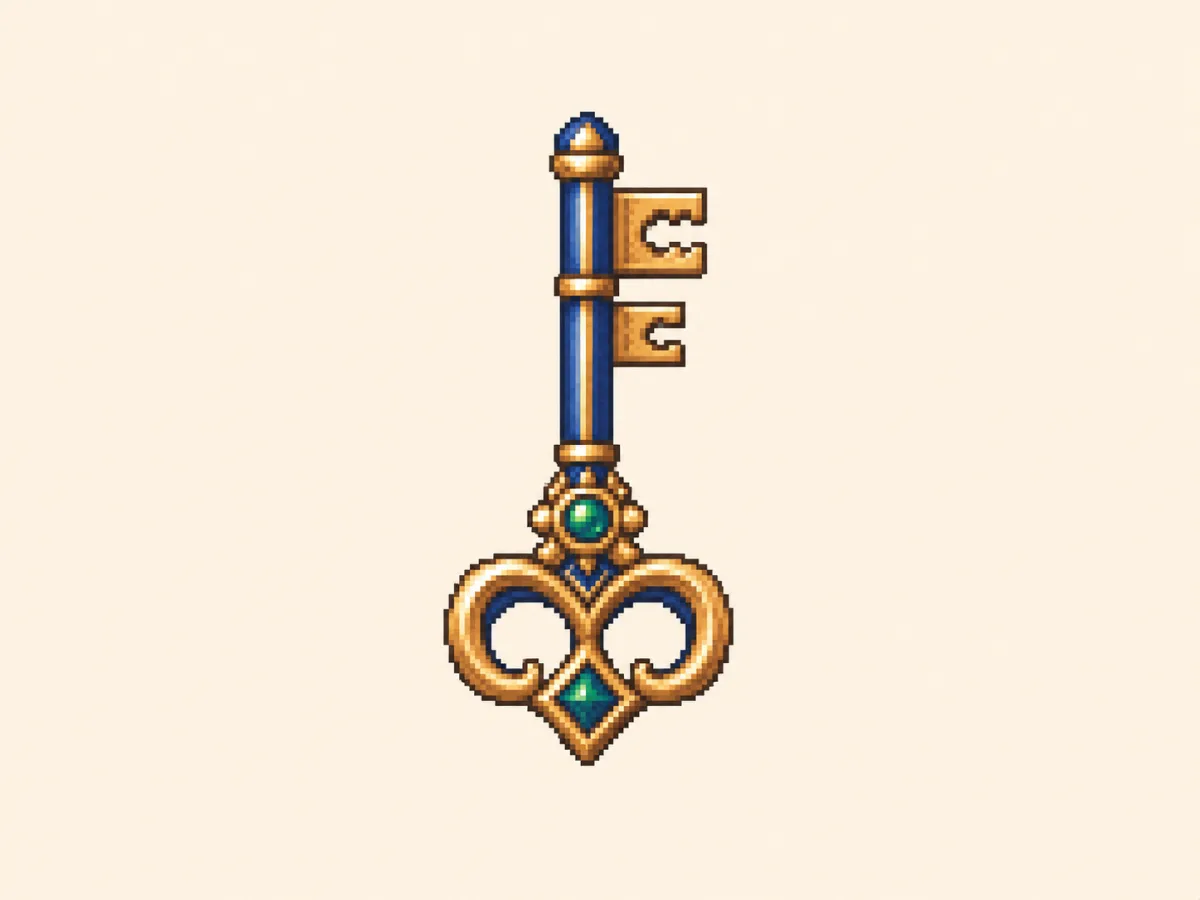
き looks like an old-fashioned skeleton key: a vertical shaft crossed by two horizontal bars near the top, with an open curve hooking around at the bottom. The word "key" sounds close enough to "ki" that the image and the sound reinforce each other every time you see it.
Sound: "k" plus "ee" from い. Crisp, not drawn out.
く (ku)
く (ku)
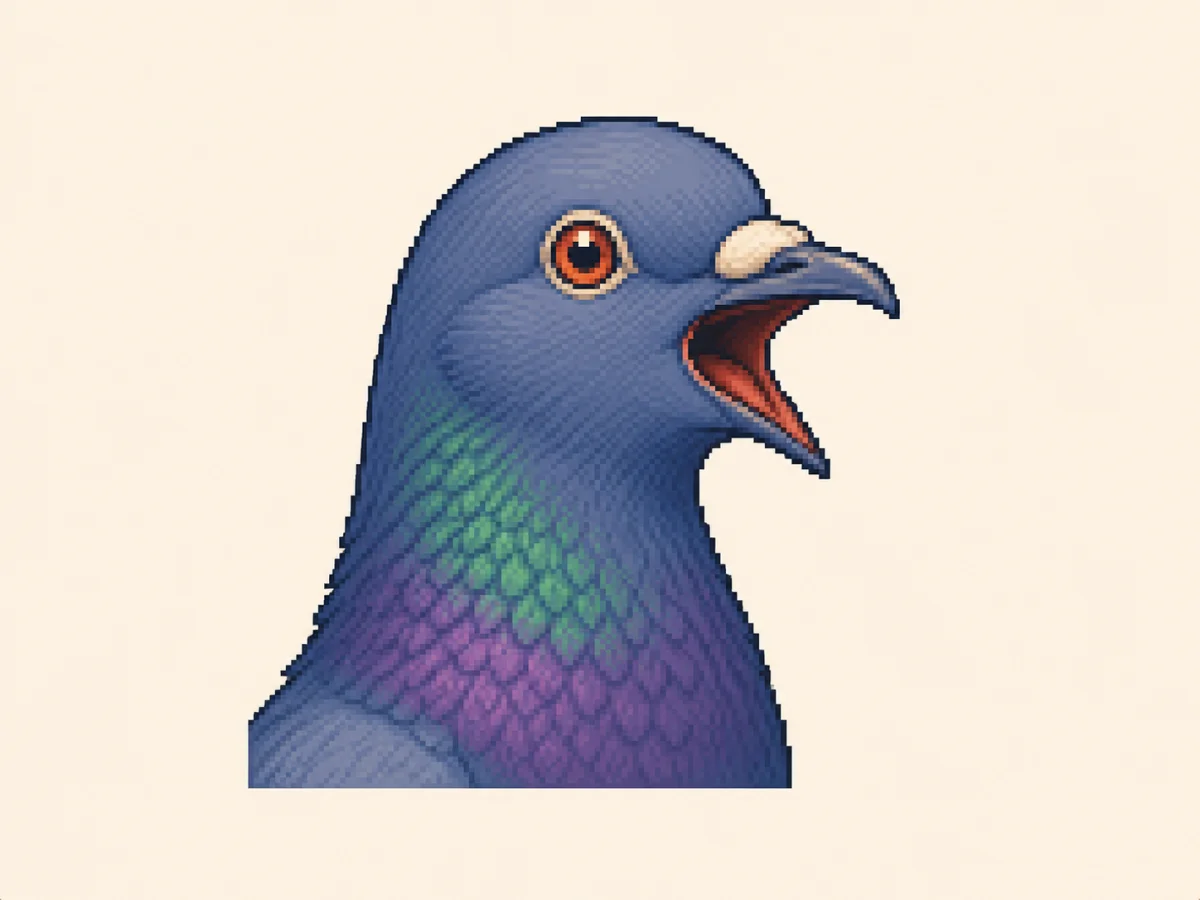
く is a single sharp angle, like a bent arm or an open beak. Picture a pigeon with its beak wide open, cooing: "coo, coo." That's the whole character, one clean stroke bending back on itself.
Sound: "k" plus the short "oo" from う. This is one of the easiest K-row characters to draw from memory because there's only one stroke to get right.
け (ke)
け (ke)
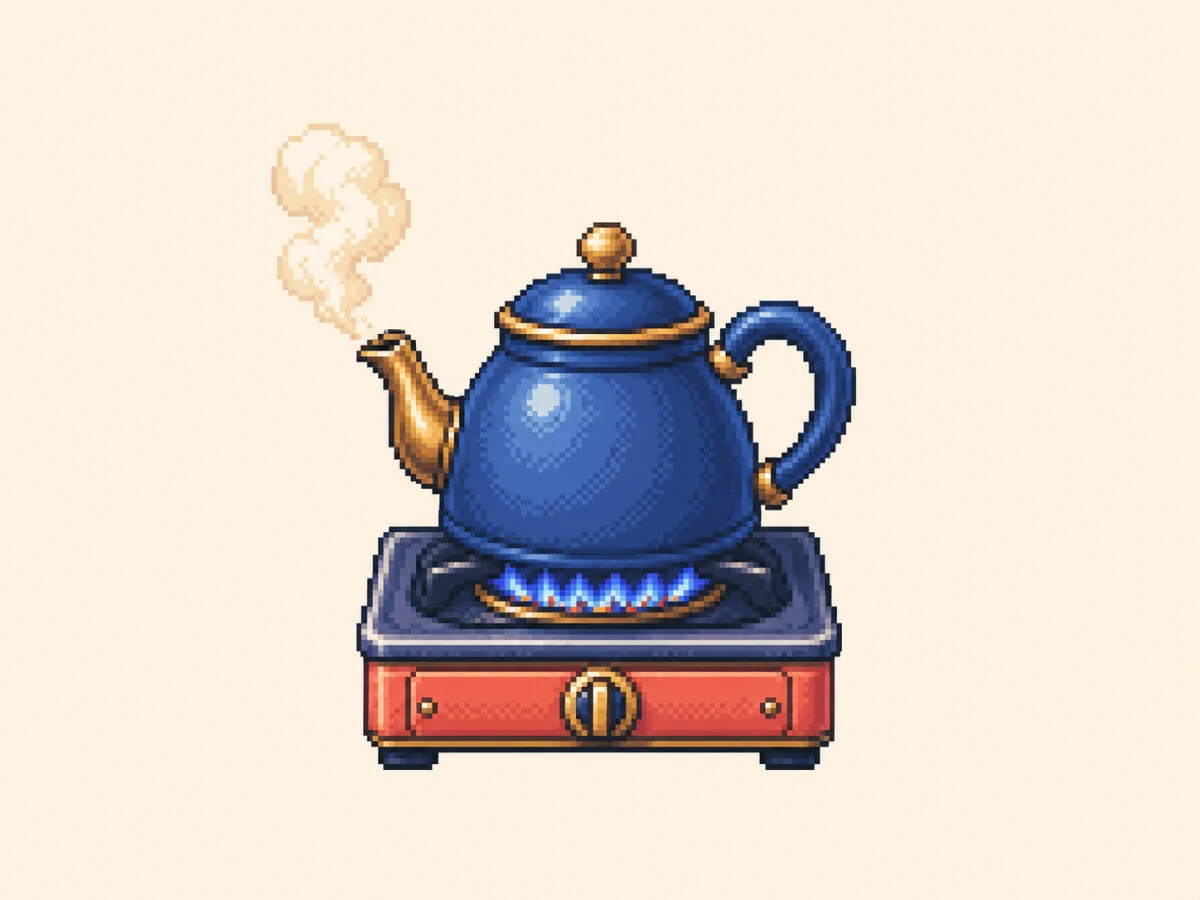
け resembles a kettle: a tall vertical body on the left, a short cross stroke like a spout, and a curved handle stroke on the right. "Ke" as in "kettle" boiling on the stove.
Sound: "k" plus the "eh" from え. Watch out, this one gets confused with き early on since both have multiple crossing strokes, but け's right-side stroke curves down like a handle, while き has two crossbars and an open curve at the bottom.
こ (ko)
こ (ko)
こ is two short horizontal strokes, stacked, both curving slightly like a pair of parentheses lying on their sides. Think of a cocoon, coiled and compact: "ko-coon."
Sound: "k" plus "oh" from お. Two of the most visually simple strokes in the entire hiragana set, which is exactly why こ rarely gives learners trouble.
The pairs to watch
き and け are the K-row's main source of confusion, since both have more than one crossing stroke near the top. The reliable tell: き has two crossbars stacked on one slanting stroke, with a separate curve underneath. け has a tall vertical standing on its own at the left, with one crossbar and a long stroke to its right. Write both several times side by side until the difference feels obvious rather than something you have to think through.
The other common mix-up isn't inside the K-row at all, it's between く and つ (from the upcoming T-row), since both are single bent strokes. For now, just note that く opens to the right like a beak, while つ curves down and to the left like a comma. You'll see this pairing again once you get to T-row.
Reading real words
With vowels plus the K-row, a real vocabulary opens up:
| Word | Reading | Meaning |
|---|---|---|
| かお | kao | face |
| き | ki | tree |
| くうき | kuuki | air |
| こえ | koe | voice |
| あか | aka | red |
| いけ | ike | pond |
| かく | kaku | to write |
| こい | koi | the fish, and also "romantic love" |
Read each of these out loud before checking the romaji. If か, き, く, け, こ come out automatically without stopping to recall the sound, they've actually landed.
Where these shapes actually come from
Every hiragana character started as a simplified, cursive version of a full kanji, chosen originally for its sound rather than its meaning. Knowing the source kanji won't change how you read か tomorrow, but it explains why the shapes look the way they do, and for some learners the extra connection is what makes a stubborn character finally stick.
か comes from 加 (add, increase), き from 幾 (how many), く from 久 (long time, eternity), け from 計 (measure, plan), and こ from 己 (self). Put 己 next to こ and the two-stroke skeleton is obviously the same shape, just smoothed into a faster, more casual stroke. 加 takes more imagination at a glance, but trace its left-hand radical in brush order and it collapses into か's vertical stroke plus swipe.
This same process produced all 46 base hiragana, and it's also why hiragana and katakana characters for the same sound sometimes echo each other, both were carved from overlapping source kanji, just simplified along different paths: katakana kept sharp corner fragments, hiragana kept the flowing cursive whole. If you've started on katakana already, you'll notice カ, キ, ク, ケ, コ follow the same k-plus-vowel pattern, just angular instead of curved.
Practice before moving on
Before moving on to the S-row, confirm you can:
- Write all five K-row characters from memory, in order
- Pick き and け out of a mixed group without hesitating
- Say each sound aloud and check yourself against the audio above
- Read all eight practice words above without sounding out letter by letter
Where to go from here
To practise writing the K-row, the hiragana K-row stroke order page animates every character stroke by stroke and lets you trace each one, with a check on the order and direction of every stroke.
The S-row is next, and し in particular is one of the more irregular sounds in the whole hiragana set, worth extra attention when you get there. For the full 46-character sequence and study timeline, see Getting Started with Hiragana. And for spaced, active-recall practice with the K-row specifically, Hirakata's Study and Quiz modes are ready whenever you are.