Japanese only has three y-sounds: ya, yu, yo. There is no yi and no ye, the same gap you hit in the hiragana Y-row. The reason is structural, not accidental: y-sounds in Japanese are always the consonant "y" fused onto one of the five vowels, and "y" plus "i" collapses into the same sound as plain い, while "y" plus "e" collapses into plain え. There is nothing missing, there is just nowhere for those two combinations to go that is not already occupied.
So this article is short by design, three characters instead of five, and a good place to catch your breath before the R-row, which is denser. All three come from kanji you will meet again: 也, 由, and 与.
ヤ (ya)
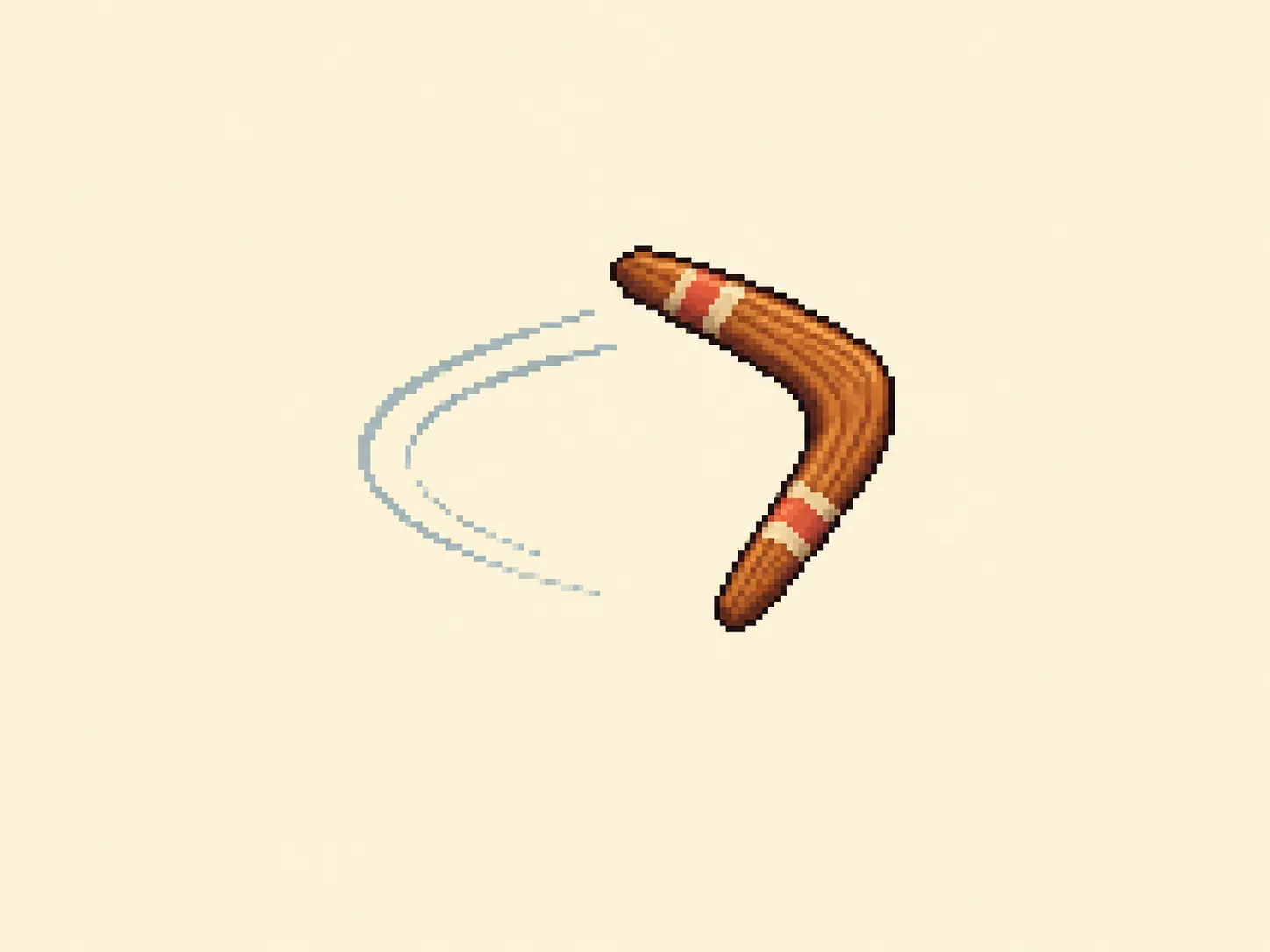
ヤ (ya)
ヤ is a fragment of 也, two strokes: a horizontal that bends back on itself, and a long slanted stroke cutting through it. It shares that origin with hiragana や.
Hook: a boomerang caught mid-flight, angled hard as it curves back. "Ya!" as it is thrown.
Stroke path: a horizontal left to right that turns sharply and hooks back down to the lower left, then a long stroke starting above it, left of center, running down and slightly to the right through the horizontal. Two strokes. The first stroke is the boomerang's bend; the second is its flight line. Let the second stroke start above the first and end well below it, so the two clearly cross.
Sound: "y" plus the "ah" from ア.
ユ (yu)
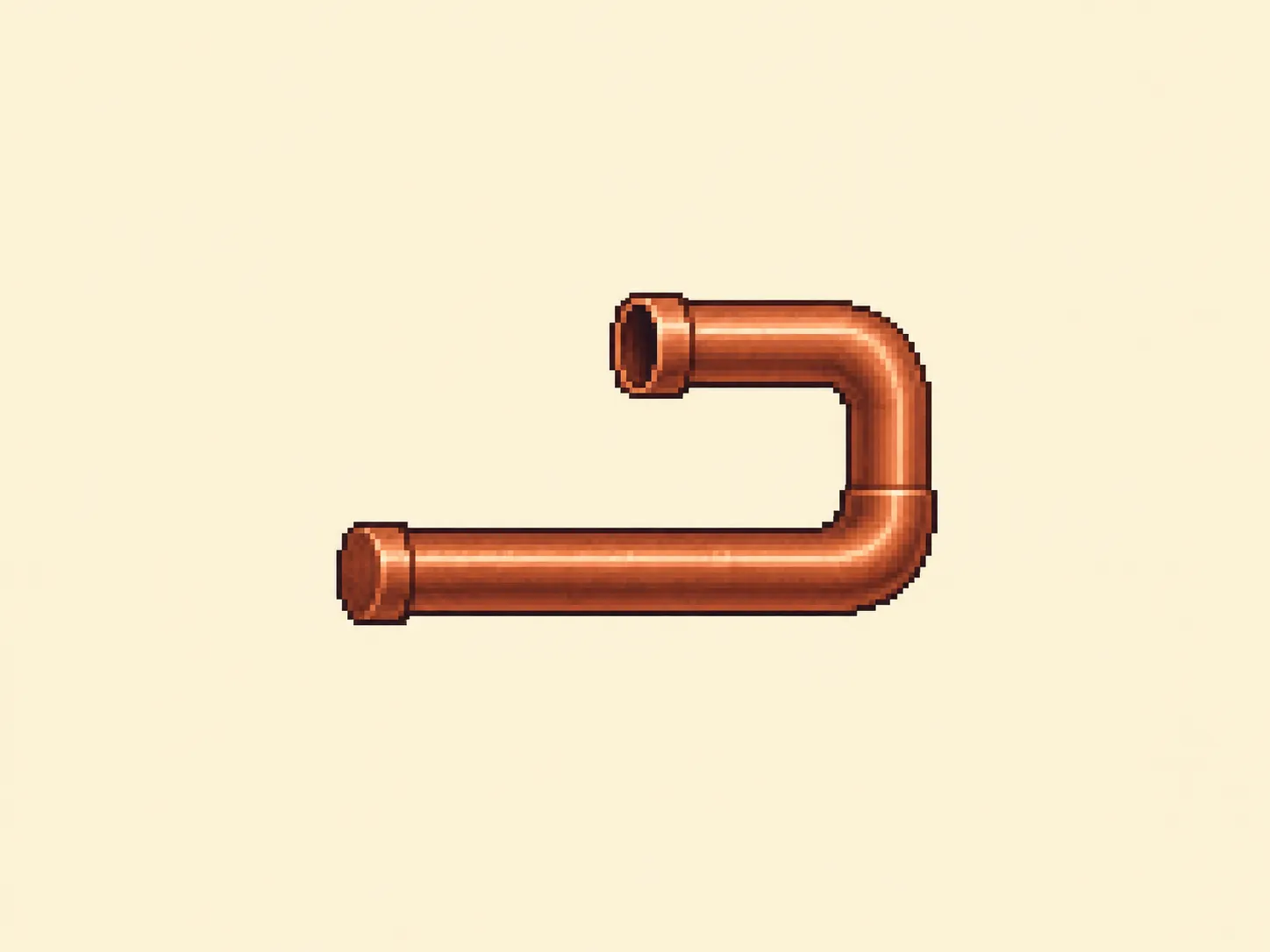
ユ (yu)
ユ is a fragment of 由, a squared-off "U" lying on its side, open to the left, sitting on a long flat base. It shares that origin with hiragana ゆ.
Hook: a pipe making a squared-off U-turn, the bottom length running out long past the bend. "Yu"-turn.
Stroke path: a short horizontal left to right that turns straight down, then one long horizontal along the bottom, drawn left to right, starting further left than the top stroke and running out past the vertical on the right. Two strokes. That long base is the whole character: shrink it back to the width of the top and you have written コ.
Sound: "y" plus the short "oo" from ウ. 由 itself shows up in words like 自由 (jiyū, freedom) and 理由 (riyū, reason), both common enough that you will see this shape again soon.
ヨ (yo)
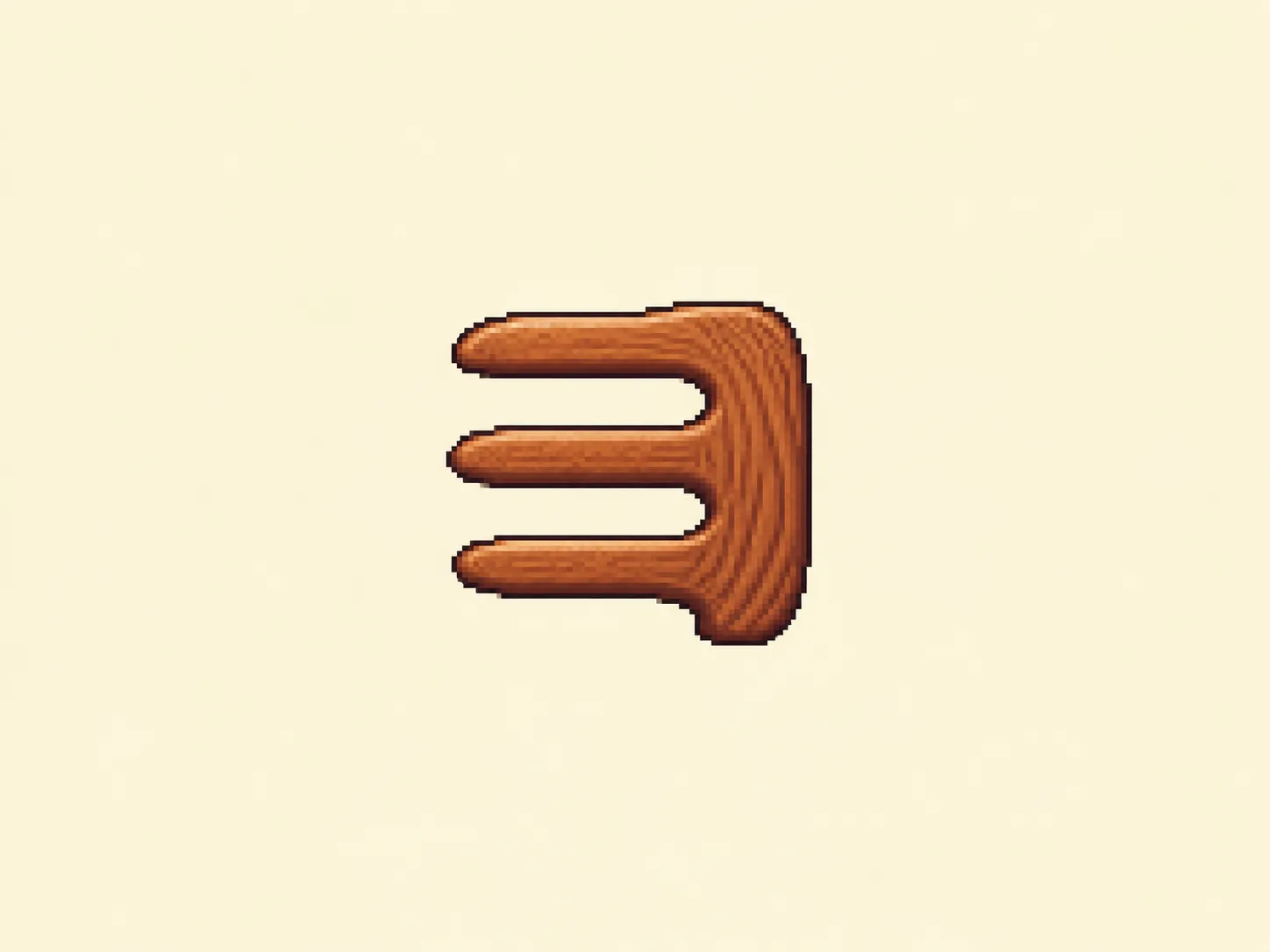
ヨ (yo)
ヨ is a fragment of 与, three horizontal strokes joined on the right by a single vertical, open to the left like a backwards E or a comb with three teeth. It shares that origin with hiragana よ.
Hook: a comb with three thick teeth, spine on the right. "Yo," comb your hair.
Stroke path: the top horizontal left to right, turning straight down the right side, then the middle horizontal, then the bottom horizontal, both drawn left to right into the vertical. Three strokes. The vertical is never its own stroke: it is the tail of the first one. 与 turns up later in 与える (ataeru, to give), so the shape is doing double duty.
Sound: "y" plus the "oh" from オ.
The look-alikes that live here
- ヨ (yo) vs エ (e). エ has exactly two horizontal bars joined by a vertical running through the middle. ヨ has three bars, and the vertical sits on the right edge rather than passing through the center. Count the bars: two means エ, three means ヨ.
- ユ (yu) vs コ (ko). Same strokes, same order, both open to the left. In コ the bottom bar stops where it meets the vertical, so the shape is a closed-off box corner. In ユ the bottom bar is the longest line in the character and sticks out past the vertical on the right. Bottom bar flush is コ, bottom bar sticking out is ユ.
Reading real words
Every word below uses only characters from this row plus earlier ones in the series, and the ー bar.
| Word | Reading | Meaning |
|---|---|---|
| タイヤ | taiya | tire |
| ユーモア | yūmoa | humor |
| ユニーク | yunīku | unique |
| コヨーテ | koyōte | coyote |
| ヤシ | yashi | palm tree |
| モヤ | moya | haze, mist |
コヨーテ is worth reading slowly: コ, ヨ, then a long bar, then テ. Four written units, four beats: ko-yo-o-te. The bar has no sound of its own, but it still gets a full beat, holding the "o" of ヨ for one count longer.
One more: ユーモア. ユ is "yu." ー holds it long. モ is "mo." ア is "a." yū-mo-a. Humor, with the English "r" dropped the way katakana usually drops it.
Practice before moving on
Before the R-row, check that you can:
- Write all three Y-row characters from memory
- Tell ヨ from エ by counting the horizontal bars, two versus three
- Tell ユ from コ by whether the bottom bar sticks out
- Read all six practice words above at a normal pace
Where to go from here
The Katakana R-Row is next, five characters again, and the one most learners find visually the densest in the whole set. For the hiragana version of this row, see Hiragana Y-Row. Drill ヤ, ユ, ヨ in Hirakata's Study and Match modes, alongside エ so the count-the-bars rule stays sharp.