The H-row is a study in contrasts. ヘ is the single easiest character in katakana, one shallow stroke, identical to its hiragana twin. フ is the same one stroke but it hides the row's one pronunciation trap. ハ is a kanji you already know. ホ almost is. And ヒ is the only character here that makes you work.
There is a payoff word waiting at the end of this row, too. Once you can read ヒ, you can finally read コーヒー (kōhī, coffee), a word you have almost certainly wanted since the K-row.
Why フ isn't "hu," and what the H-row actually sounds like
The row is ha, hi, fu, he, ho. The odd one is フ. It is not "hu." But it is also not the hard English "f" where your top teeth touch your bottom lip. Japanese フ is made with both lips, close together but not touching, and you blow air between them, the sound you make cooling a spoonful of soup. Linguists call it a bilabial fricative. You do not need the term. You need to stop putting your teeth into it.
The other four are a clean "h" plus their vowel, with one small note: ヒ before its "ee" vowel gets a little breathier in fast speech, closer to the "h" in "huge." Do not force it. The audio on each character is the reference.
One more quirk, and it is a hiragana one that does not affect you here: the character は is read "wa" when it is the topic particle, and へ is read "e" when it marks direction. Those readings are grammar, not sound rules, and they never happen in katakana, because katakana does not write particles. So in katakana, ハ is always "ha" and ヘ is always "he," no exceptions.
What you get for free
Two of these characters hand you a kanji. ハ is 八, the number eight, which turns up in 八月 (hachigatsu, August), in prices, in 八百屋 (yaoya, greengrocer), everywhere. ホ is one bottom stroke away from 木, the tree that appears in 木曜日 (mokuyōbi, Thursday), 本 (hon, book), 林 and 森 (woods and forest), and hundreds more. ヒ comes from 比, which you meet early in 比べる (kuraberu, to compare). Learn the H-row shapes now and three high-frequency kanji are already half-familiar.
ハ (ha)
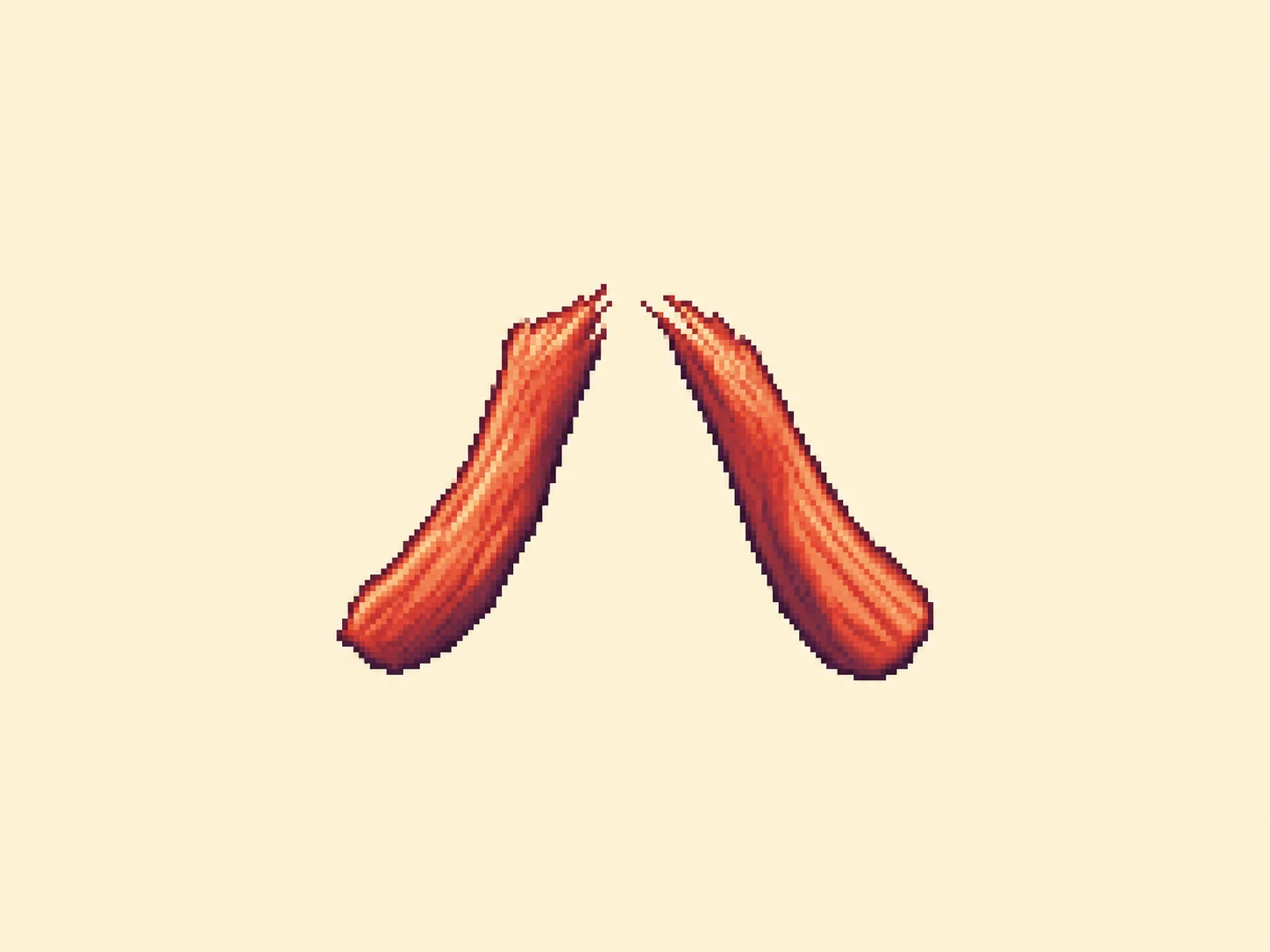
ハ (ha)
ハ is the kanji 八 (hachi, "eight"). Same two strokes, splaying apart from a near point at the top without quite meeting.
Hook: it is the "eight" kanji, and "ha" is close to "hachi." If you would rather have a picture, it is a mouth thrown open mid-laugh, "ha ha."
Stroke path: a short stroke slanting down-left, then a longer stroke slanting down-right, starting near the top of the first but not touching it. Two strokes.
Sound: "h" plus the "ah" from ア.
ヒ (hi)
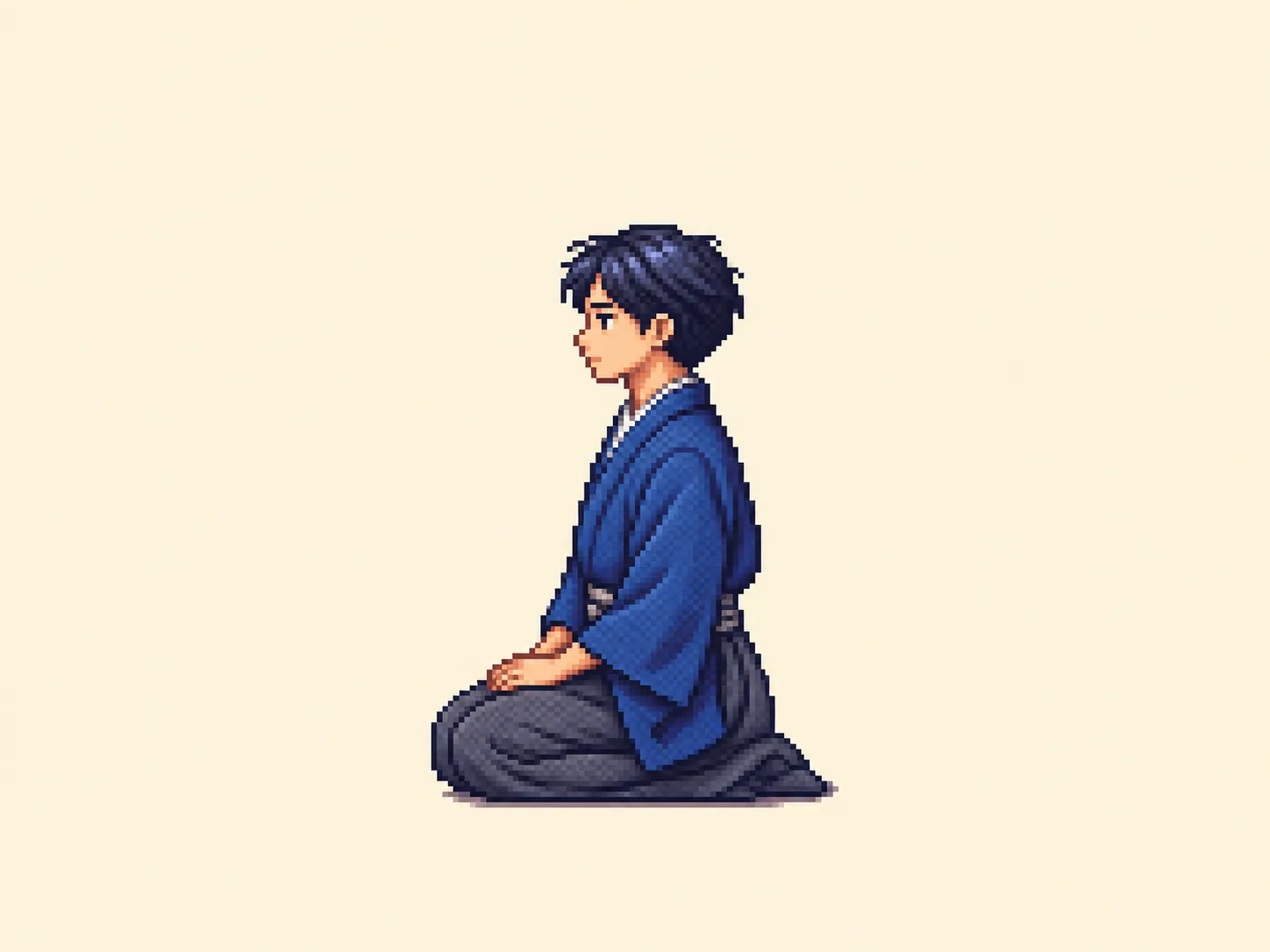
ヒ (hi)
ヒ is the one character in the row that needs a real mnemonic. It comes from 比, and it is two strokes: a short one rising to the right, and a longer one that drops and then turns hard to the right along the bottom.
Hook: a person kneeling in the formal Japanese way, shins folded back, sitting on their heels. The short stroke is the bent torso, the long stroke is the leg folded under and the foot pointing back. "Hi" as they settle in.
Stroke path: a short stroke going up to the right, then a long stroke starting above it, coming down, and hooking sharply right at the bottom. Two strokes. The bottom hook is the whole identity of the character. If you let it round off or trail away, ヒ starts to look like a lazy ト or a stray フ. Keep the corner square and the foot flat.
Sound: "h" plus the "ee" from イ.
フ (fu)
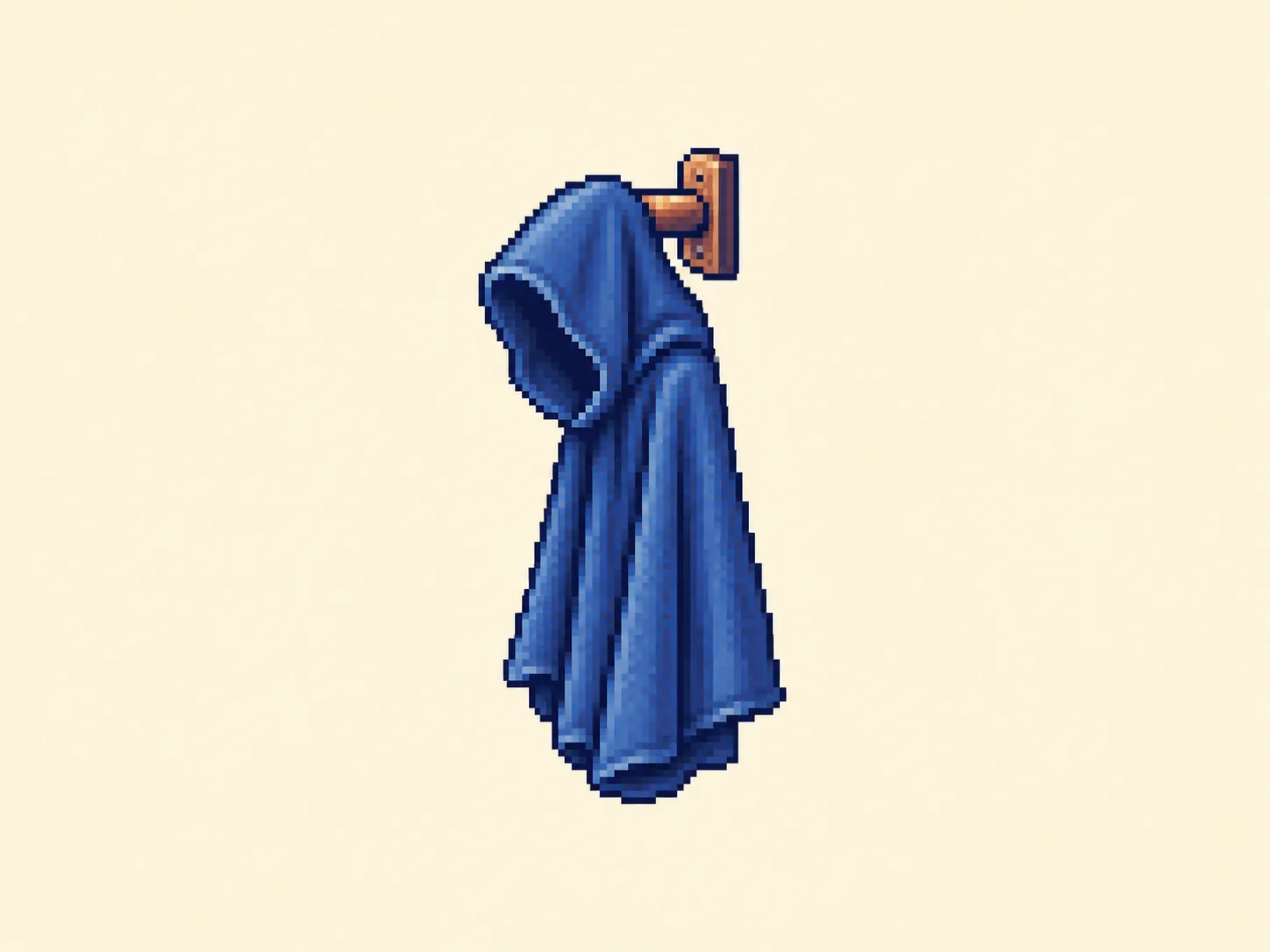
フ (fu)
フ is a single stroke: a short horizontal that bends and drops away to the lower left. It is a fragment of 不. Because it is only one stroke, the whole character is about the angle of that one bend.
Hook: a hood. フード (fūdo) is the loanword for a hood, and フ is the drape of an empty hood folding forward. The single bent line is the fold of the fabric.
Stroke path: a short horizontal from the left, bending near its right end and sweeping down to the lower left in one continuous motion. One stroke. The bend should be a clear corner, not a curve. A rounded フ drifts toward ワ or ウ; a sharp-cornered フ stays itself.
Sound: the bilabial "fu" from the section above. Lips close, no teeth, blow. It is the same consonant in ふ, ぷ, and the whole は column's odd member, so getting it right here fixes it for good.
ヘ (he)
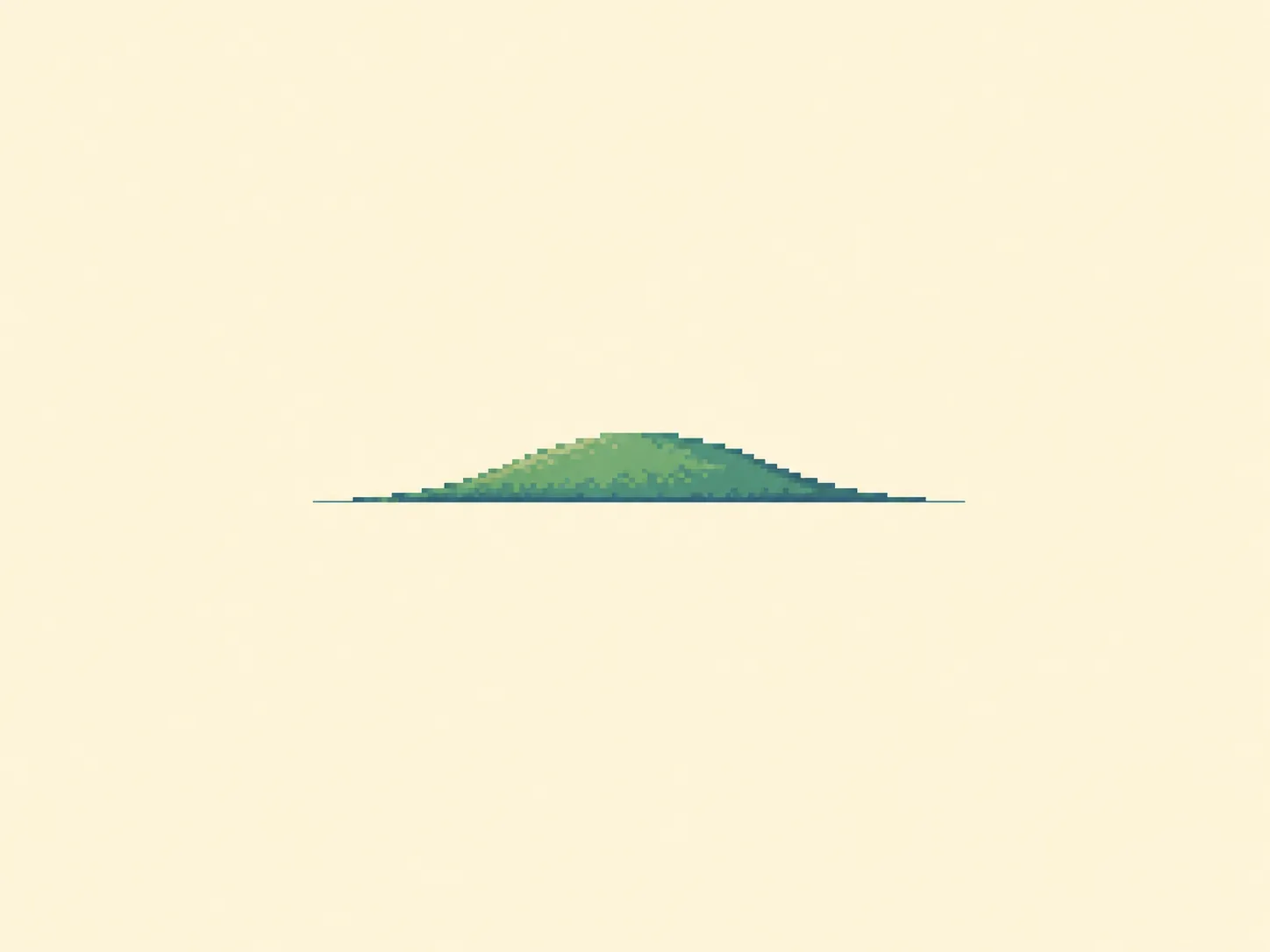
ヘ (he)
ヘ is one shallow stroke, up a little and then down a little, like a very gentle mountain. It is identical to hiragana へ. Same shape, same size, and the only way to tell which script you are reading is the surrounding text.
Hook: a distant hill on the horizon. There is not much to it, and there does not need to be. It is the easiest character in katakana.
Stroke path: one stroke, rising gently to a soft peak just left of center, then sloping down and slightly longer on the right. One stroke.
Sound: "h" plus the "eh" from エ.
ホ (ho)
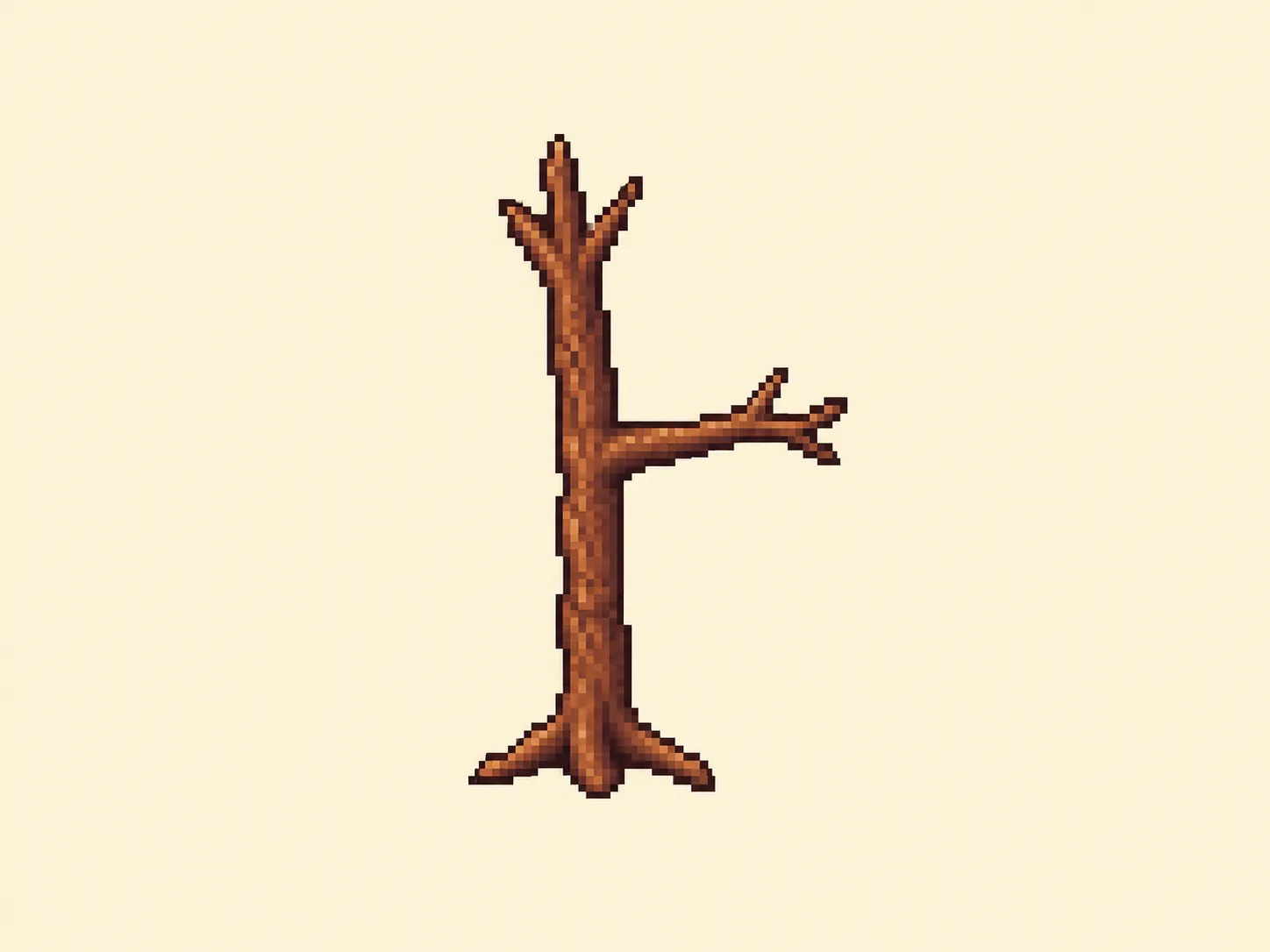
ホ (ho)
ホ is close to the kanji 木 (ki, "tree"). A vertical trunk, one horizontal branch crossing it, and at the bottom two short strokes kicking out to the sides like roots or a splash.
Hook: a bare tree. Trunk, branch, roots. The difference from 木 is the bottom: 木 flares out in two continuous diagonals, ホ has two separate short kicks that do not connect to the trunk.
Stroke path: a horizontal, a vertical down through it, then a short stroke kicking out to the lower left and another to the lower right, both separate from the trunk. Four strokes.
Sound: "h" plus the "oh" from オ.
The look-alikes that live here
- フ (fu) vs ワ (wa) vs ウ (u) vs ク (ku). フ is one stroke and nothing else. ワ closes into a fuller shape, ウ wears a tick on top, ク meets at a sharp point with a second stroke. If it is a single bent line, it is フ. ワ is in the final characters.
- フ (fu) vs ラ (ra). ラ is フ with a short separate stroke floating above it. Add a hat to フ and you get ラ, from the R-row.
- ホ (ho) vs ネ (ne). ホ is upright and symmetric, a plus with two feet. ネ (from the N-row) leans, and it has a stroke floating above everything else. Balanced means ホ.
- ホ (ho) vs 木. The bottom tells them apart: separate kicks for ホ, one continuous flare for the kanji 木.
- ハ (ha) vs the top of other splaying shapes. ハ's two strokes never touch. If the strokes meet at the top, you are looking at something else, like ル or the start of メ.
Reading real words
Thirty characters. Every word below is built only from Vowels, K, S, T, N, and H-row characters, plus the ー bar.
| Word | Reading | Meaning |
|---|---|---|
| コーヒー | kōhī | coffee |
| ハート | hāto | heart (the shape or symbol) |
| ナイフ | naifu | knife |
| ヘア | hea | hair, as in ヘアカット |
| ホース | hōsu | hose |
| ヒーター | hītā | heater |
| スカーフ | sukāfu | scarf |
| ノート | nōto | notebook |
コーヒー is the milestone. コ, then the bar, then ヒ, then the bar again: "koh" held long, "hee" held long. Four written characters, two long beats. Say it out loud and notice you just read the single most useful katakana word in a café.
Decode two more the slow way:
- スカーフ. ス is "su." カ is "ka." ー holds it long. フ is "fu." su-kā-fu. Scarf. The English "-rf" ending has no vowel, so Japanese lands on フ with its own "u" and the "r" simply drops, absorbed into the long "ā."
- ヒーター. ヒ is "hi." ー long. タ is "ta." ー long. hī-tā. Heater. Two syllables, both stretched by a bar, which is the standard Japanese treatment of an English word that ends in "-er."
Drilling the H-row
ヘ and ハ need almost no practice. Give フ a few reps focused purely on the bend angle, and say "soup" or "hood" as you write it so the lips-not-teeth sound stays attached. ヒ and ホ are where the time goes: write each five times, ヒ with the hard bottom hook, ホ with the two separate foot-kicks. Then Match mode with the N-row on, so ホ sits next to ネ and you have to call which one leans. If you have already learned the R-row, switch ラ on as well and drill it against フ, since that floating top stroke is the only thing between them and it is easy to miss at a glance.
Practice before moving on
Before the M-row, check that you can:
- Write all five H-row characters from memory, in order
- Make the フ sound with your lips, no teeth
- Tell フ from ラ by the floating stroke, and ホ from ネ by which one is symmetric
- Read コーヒー cleanly, out loud, holding both long vowels
- Read all eight practice words above at a normal pace
Where to go from here
The Katakana M-Row is next, and it brings メ, which pairs with the ナ you learned in the N-row. For the hiragana version of this row, see Hiragana H-Row. The Understanding Katakana overview has more on the loanword patterns you are starting to recognize. Drill ハ, ヒ, フ, ヘ, ホ in Hirakata's Study and Match modes, with the N-row switched on.