The N-row does not have a marquee problem like the S-row's シ and ツ. What it has instead is a set of characters that each sit one stroke away from a character you already learned. ヌ is ス plus a stroke. ノ is ソ minus a stroke. ニ is a stroke short of エ. That makes the whole row easy to read if you get one habit going: when two characters look close, count the strokes before you commit.
Only ネ is genuinely new, and it is the busiest character you have met so far. Everything else in this row you can almost derive.
Why counting strokes works here
Katakana is a small set of shapes reused with tiny variations. Nowhere is that clearer than the N-row. Four of its five characters differ from a neighbor by exactly one stroke, and that one stroke is always easy to see once you are looking for it. So the reading strategy for this row is not "recognize the whole shape at a glance," it is "spot the difference." Slower for a week, then automatic.
A note on the N sounds
The five N-row sounds are the most predictable in katakana. ナ, ニ, ヌ, ネ, ノ are "n" plus a vowel, exactly as written, with none of the shifts the T-row had. Say them like the "n" in "no" or "knee."
The one thing to keep separate in your head: none of these is the standalone "n" sound, the one at the end of パン (pan, bread) or ラーメン (rāmen). That sound is its own character, ン, and it does not attach to a vowel. It lives in the final characters article. For now, if you see a lone "n" with no vowel after it, that is ン, not anything from this row.
ナ (na)
ナ (na)
ナ is two strokes: a horizontal, then a vertical that crosses it and hooks slightly left at the bottom. It comes from 奈, the same kanji behind hiragana な, and it is exactly the cross that な starts with before な adds its extra strokes on the right.
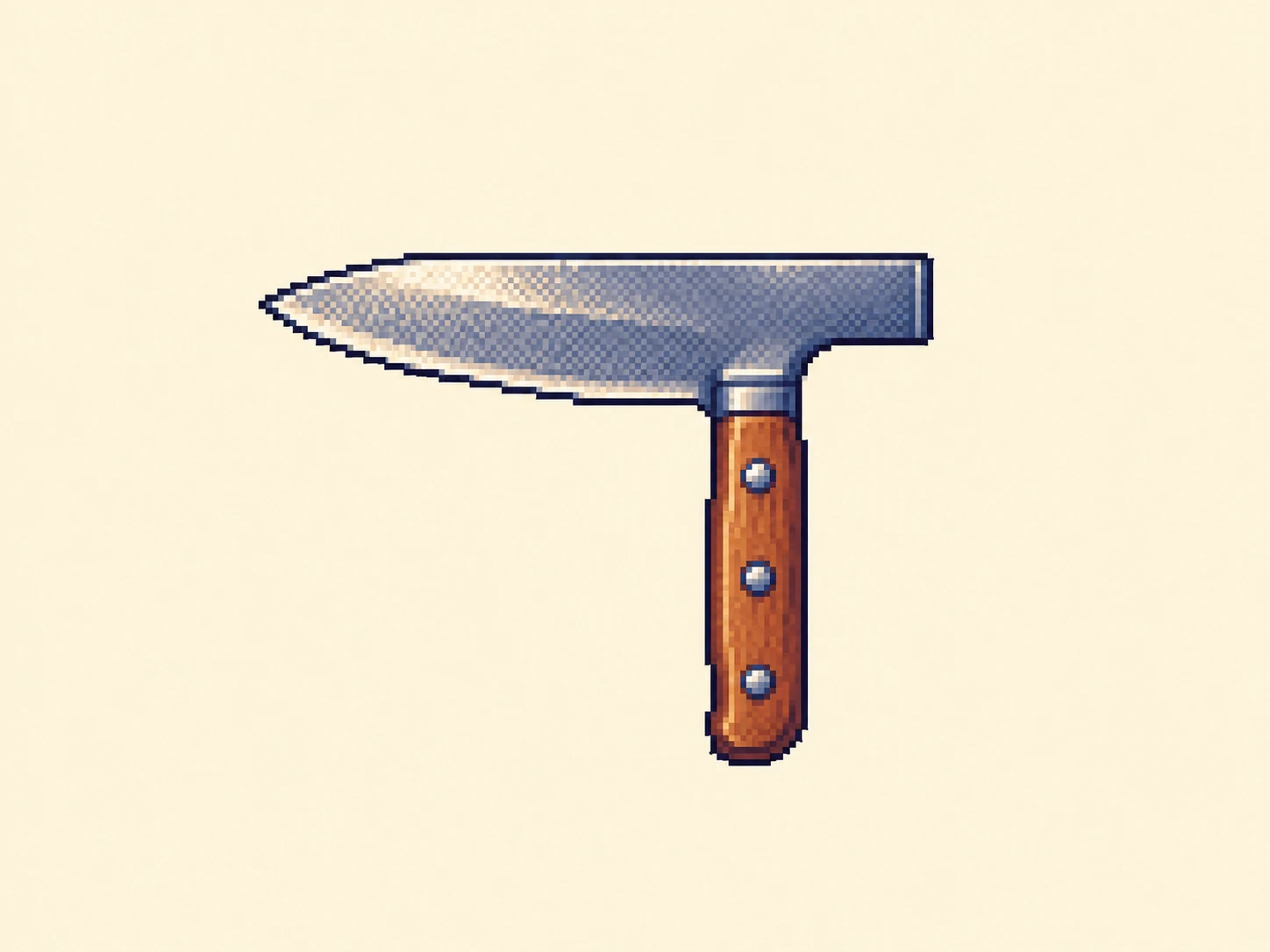
Hook: a knife. The horizontal is the blade, the vertical is the handle hanging down. ナイフ (naifu) is the Japanese word for knife, and it starts with this character.
Stroke path: a horizontal left to right, then a vertical from above the line down through it, hooking left at the end. Two strokes. The vertical crosses the horizontal past its midpoint and leans, which is what keeps ナ from reading as a neat plus sign or as チ.
Sound: "n" plus the "ah" from ア. The kanji 奈 it comes from is the 奈 in 奈良 (Nara), so the shape is a small head start on a place name you will see constantly.
ニ (ni)
ニ (ni)
ニ is the kanji 二 (ni, "two"). Not derived from, not a fragment of. It is the character, unchanged. Two horizontal strokes, the top one a little shorter.
Hook: "ni" is the Japanese word for two, and 二 is how you write it. The shape and the meaning and the sound are all the same fact. This is the third katakana character that is really a whole kanji, after エ (工) and チ (千), and it is the most useful of the three: 二 is in every date, every price, every count of two anything, and in 二月 (nigatsu, February).
Stroke path: a short horizontal on top, a longer horizontal below it. Two strokes, no vertical anywhere.
Sound: "n" plus the "ee" from イ.
ヌ (nu)
ヌ (nu)
ヌ is ス with one extra stroke slashing across it. It comes from 奴. If you can already write ス, you can write ヌ by adding a single diagonal through the middle.
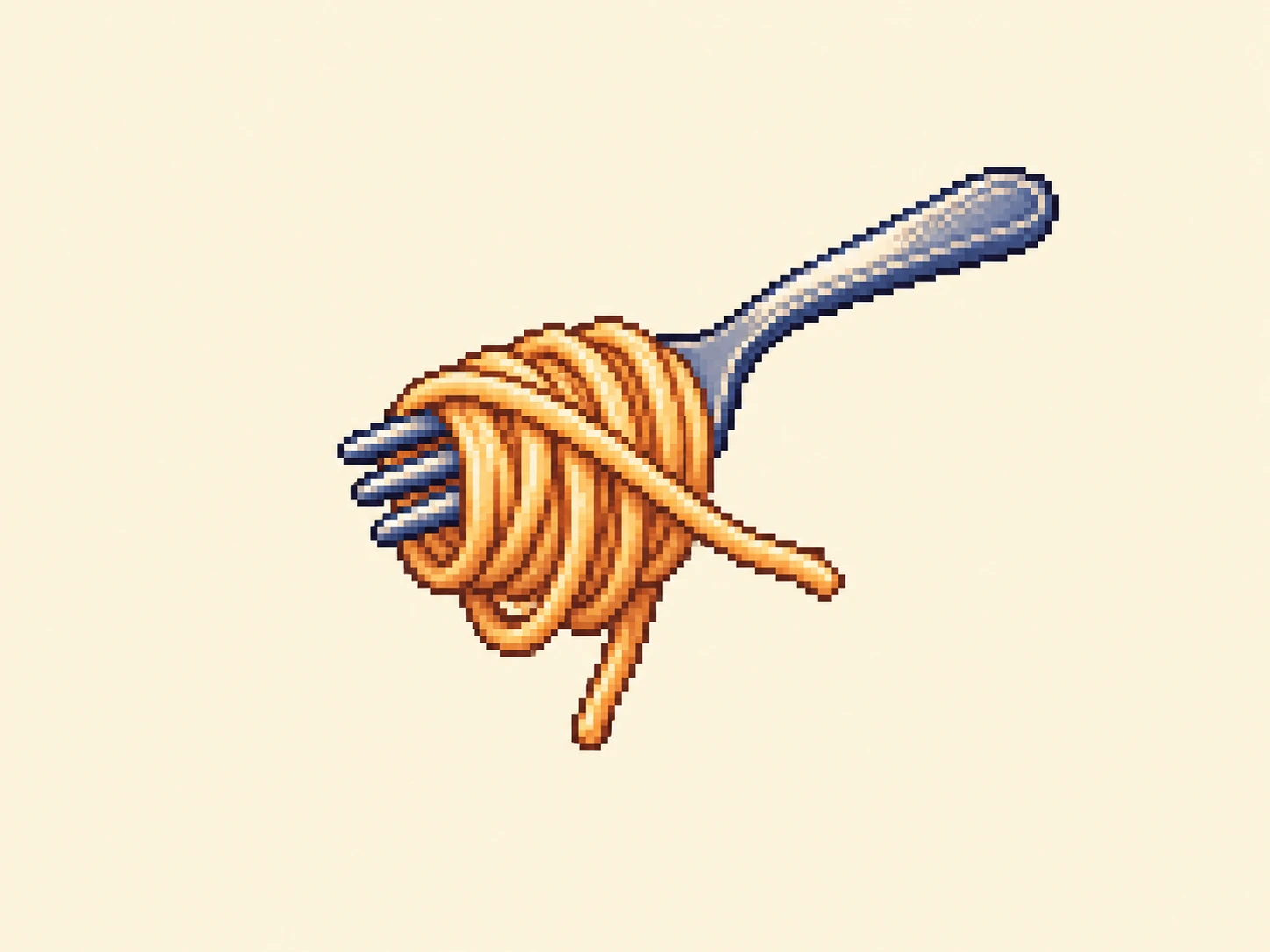
Hook: noodles. ヌードル (nūdoru) is one Japanese word for noodles, and it starts here. Picture a fork twirling a tangle, with one strand flicking loose across the shape. That loose strand is the extra stroke.
Stroke path: a short diagonal down to the right, then a long stroke down and sweeping to the lower left (that is ス), then one short stroke cutting across the join. Three strokes.
Sound: "n" plus the short "oo" from ウ.
ネ (ne)
ネ (ne)
ネ is the one character in this row that needs real attention. It is five-ish strokes of tick, cross, and hook, and it comes from 祢. Its shape is close to 礻, the "altar" or "spirit" radical that appears on the left of kanji like 神 (kami, god) and 社 (sha, shrine).
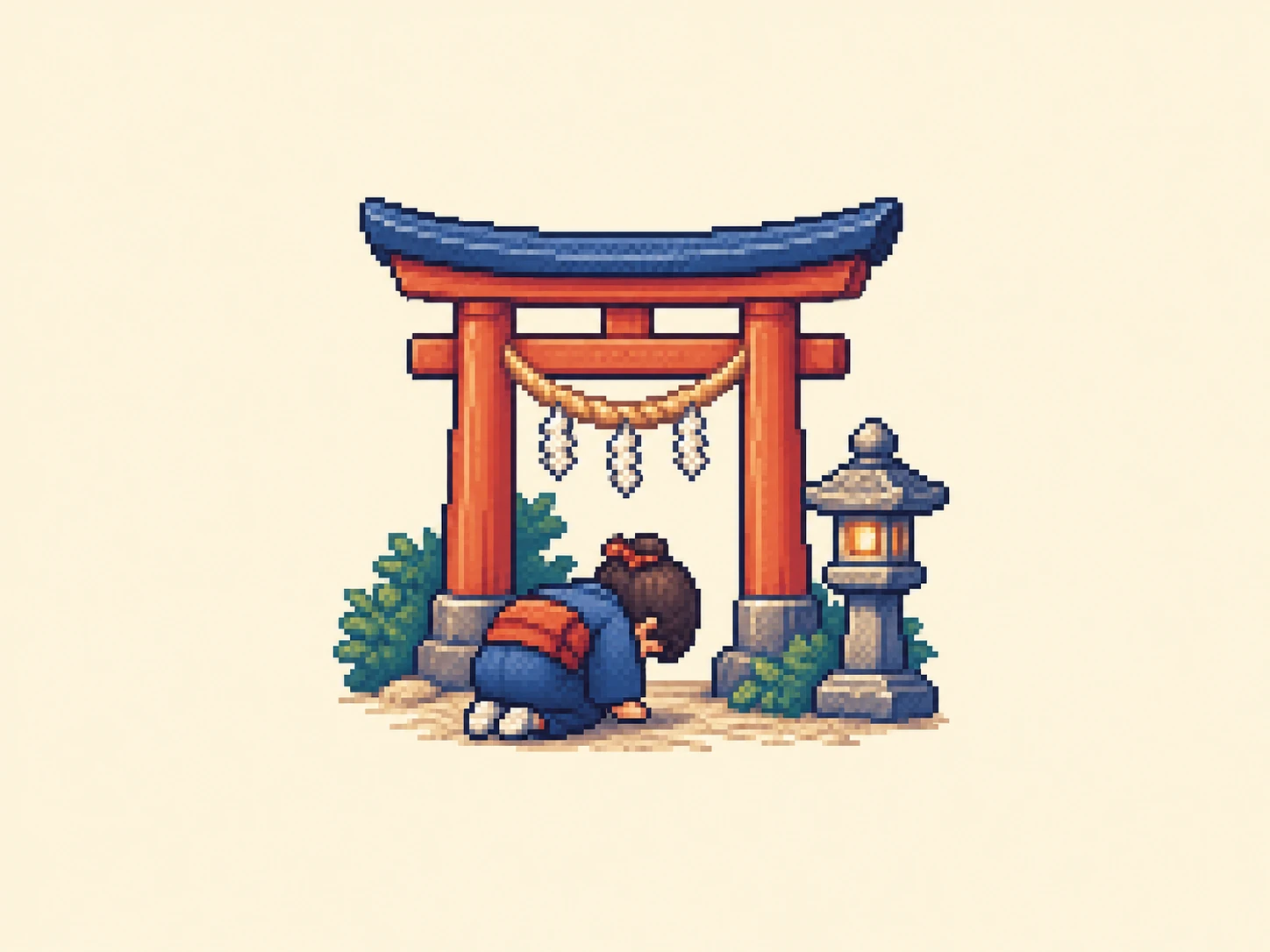
Hook: a small figure kneeling at a roadside shrine. The top tick is a bowed head, the crossing strokes are the body and the shrine gate. "Ne" as a quiet prayer. If the shrine image does not hold, the fallback is hiragana ね, which shares the origin and the same crowded, leaning feel: think of ネ as ね that has been squared off and had its loop cut, the same trick as き to キ.
Stroke path: a short tick at the top, a horizontal below it, then a vertical through the horizontal with two short strokes kicking off it to the lower left and right. Four strokes, sometimes counted as five. The key features to fix are the lean and the tick: ネ is never upright, and it always has that separate mark floating above everything else.
Sound: "n" plus the "eh" from エ.
ノ (no)
ノ (no)
ノ is one stroke: a clean diagonal from the upper right to the lower left. It is a fragment of 乃. It is the plainest character in katakana alongside ト.
Hook: the slash through a no-entry sign. One line, and it means "no." The sound is right there.
Stroke path: a single diagonal, upper right to lower left, sometimes with the faintest curve. One stroke.
Sound: "n" plus the "oh" from オ.
The look-alikes that live here
Every one of these comes down to counting.
- ヌ (nu) vs ス (su). Slash through the middle: ヌ. No slash: ス. One stroke of difference.
- ノ (no) vs ソ (so) vs ン (n). ノ is one stroke, alone. ソ (from the S-row) adds a short stroke on top and sweeps down. ン (from the final characters) adds a short stroke low on the left and sweeps up. One, two-down, two-up.
- ニ (ni) vs エ (e) vs the equals sign. ニ is two horizontals with nothing joining them. エ has a vertical connecting the two bars. If there is no vertical, it is ニ.
- ナ (na) vs メ (me). ナ is a horizontal crossed by a vertical, a plus sign. メ (from the M-row) is two diagonals crossing, an X. Plus versus X.
- ネ (ne) vs ホ (ho). Both are busy and roughly vertical. ネ leans, with a tick up top and an off-center cross. ホ (from the H-row) is upright and symmetric, like a plus with two feet. If it looks balanced, it is ホ.
Reading real words
Twenty-five characters now, and the list is getting genuinely useful. Every word below is built only from Vowels, K, S, T, and N-row characters, plus the ー bar.
| Word | Reading | Meaning |
|---|---|---|
| テニス | tenisu | tennis |
| ノート | nōto | notebook |
| ネクタイ | nekutai | necktie |
| カヌー | kanū | canoe |
| ナイス | naisu | "nice" |
| サウナ | sauna | sauna |
| ツナ | tsuna | tuna |
| コネ | kone | connections, personal pull |
ツナ is a good stroke-count drill in itself: ツ (two strokes on top, sweeps down) then ナ (a plus). Read it slowly and notice that you are checking stroke arrangement on the first character and stroke shape on the second. That is the whole skill of this row in one two-character word.
Two more the slow way:
- ネクタイ. ネ is "ne." ク is "ku." タ is "ta." イ is "i." ne-ku-ta-i. Necktie. English "neck-" becomes "ne-ku-" with the vowel padding again, and the "-tie" is just タ plus イ.
- テニス. テ is "te." ニ is "ni." ス is "su." te-ni-su. Tennis. The double "n" in the English spelling collapses to a single ニ, because Japanese does not double a consonant that way without the small ッ mark.
Drilling the N-row
Run ナ, ニ, ノ once in Hirakata's Study mode and do not linger. Spend your reps on ヌ and ネ. For ヌ, write ス then add the slash, every time, until the pair is one motion. For ネ, write it out five times in a row and say "shrine" as you finish. Then run a Match round with the S-row on, so ヌ sits next to ス and ノ sits next to ソ and you are forced to make the stroke-count call at speed.
One more thing that helped me: when a character in this row is close to one you know, say the difference out loud, not just the reading. Not "nu," but "su plus a slash, nu." Not "no," but "one stroke, no." Naming the difference turns recognition into a quick check you can trust instead of a pattern-match you have to hope lands. After a week you drop the narration and it is just fast.
Practice before moving on
Before the H-row, check that you can:
- Write all five N-row characters from memory, in order
- Turn ス into ヌ and back with one stroke
- Tell ノ, ソ, and ン apart by stroke count and sweep direction
- Tell ニ from エ by the missing vertical
- Read all eight practice words above at a normal pace, out loud
Where to go from here
The Katakana H-Row is next, and it has its own irregular member, フ, plus ホ, which pairs with the ネ you just learned. For the hiragana version of this row, see Hiragana N-Row. The look-alike-pairs section of Understanding Katakana covers ノ versus メ in more depth. Drill ナ, ニ, ヌ, ネ, ノ in Hirakata's Study and Match modes, with the S-row switched on.