The K-row is where katakana stopped feeling like a chore for me and started feeling like a code I could crack. With the five vowels plus these five characters, I could suddenly read ケーキ (kēki, cake), ココア (kokoa, cocoa), and カメラ (kamera, camera) off signs and menus. Ten characters in, and real words start falling out. That momentum matters, so this is a good row to spend proper time on.
It is also the friendliest row to memorize, because three of its five characters are lifted almost unchanged from kanji you will use for years. カ is a whole kanji on its own. キ is its hiragana twin with one stroke removed. コ is a shape so plain it barely needs a story. Only ク and ケ take real effort.
Why the K-row is a soft landing
Katakana characters are fragments of kanji, single pieces snipped out and used for their sound. Usually the fragment is unrecognizable once you see the full character. The K-row is the exception. Its pieces are clean, and two of them are radicals or kanji you already have some contact with. So instead of memorizing five arbitrary shapes, you are really memorizing two (ク and ケ) and just confirming three you can half-derive. Lean on that. It does not happen again until much later in the series.
A note on the Japanese k sound
Before the shapes, the sound. The Japanese "k" is close to the English one but not identical. In English, the "k" in "cat" comes with a little puff of air after it, called aspiration. Hold your hand in front of your mouth and say "cat" and you will feel it. Japanese "k" has almost none of that puff. It is a cleaner, tighter stop, closer to the "k" in "skate" than the one in "Kate." This is a small thing, but it is the difference between sounding like a textbook and sounding like you have listened to real Japanese. The audio on each character below has it right, so copy what you hear rather than what the romaji suggests.
カ (ka)
カ (ka)
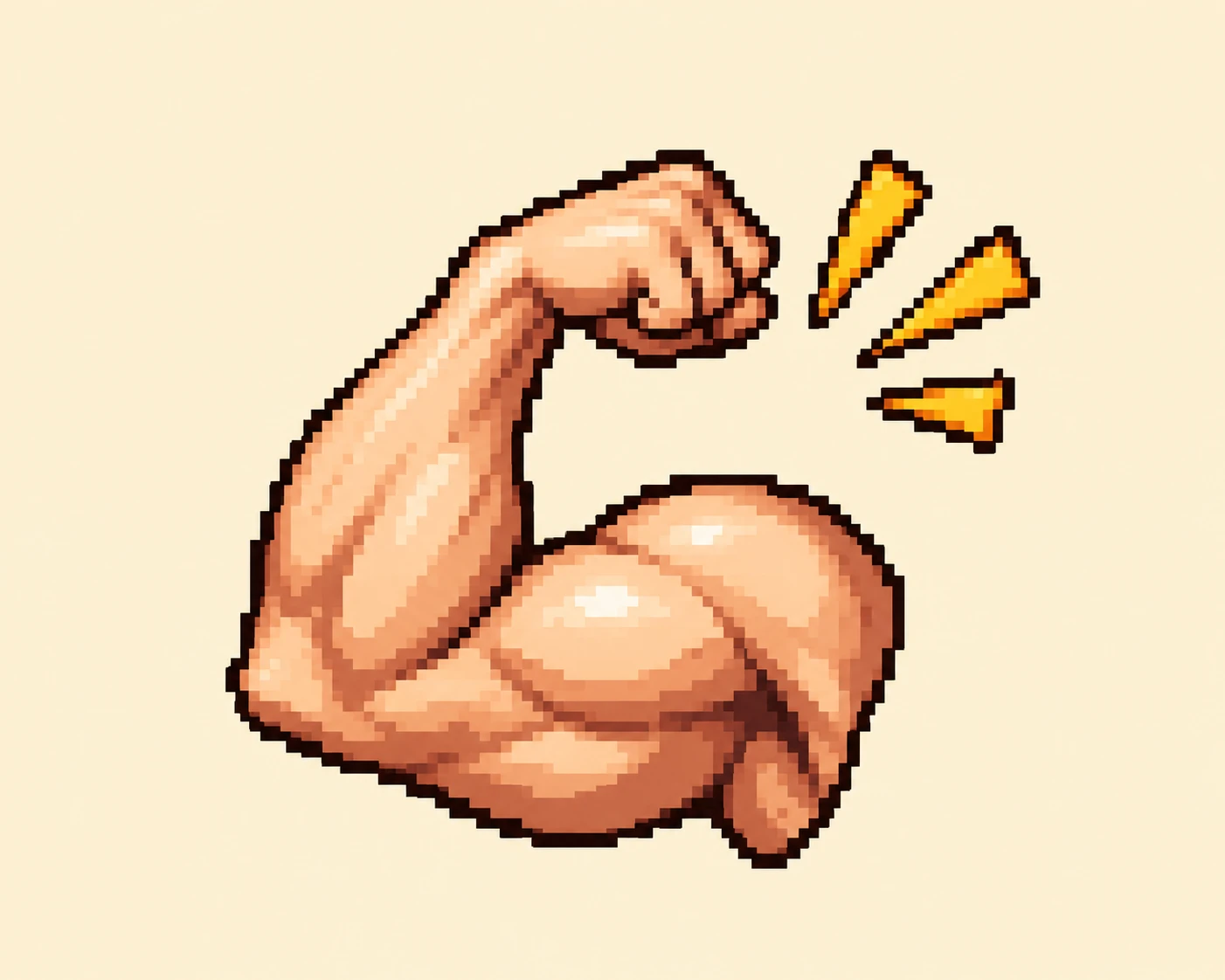
カ is the kanji 力 (chikara, "power" or "strength"). Same shape, near enough: a stroke that bends at the shoulder and a diagonal that kicks out like a flexed arm. カ is the left-hand piece of 加, the kanji it was cut from, and that left-hand piece is 力 itself.
Hook: 力 is power, so picture a bicep flexing. "Ka-pow." The bent stroke is the upper arm, the kick-out is the forearm curling up. You will meet 力 constantly once you start kanji, in 力 itself, in 男 (otoko, man, literally "power in the field"), in 動 (dō, move), so the shape is worth locking in now while it costs you nothing.
Stroke path: one stroke going across and then hooking down the right side, then a diagonal cutting through it from upper right to lower left, flicking off at the end. Two strokes. Note that the diagonal starts above where the first stroke begins, which is what keeps カ from collapsing into a plain 7 shape.
Sound: "k" plus the "ah" from ア. Clean stop, no puff.
キ (ki)
キ (ki)
キ is き with the bottom stroke cut off. Both come from the same kanji, 幾. Put them next to each other: hiragana き has two short crossing strokes at the top and a long curved stroke swooping down and around. Katakana キ keeps the two crossing strokes and the vertical, and drops the swoop.
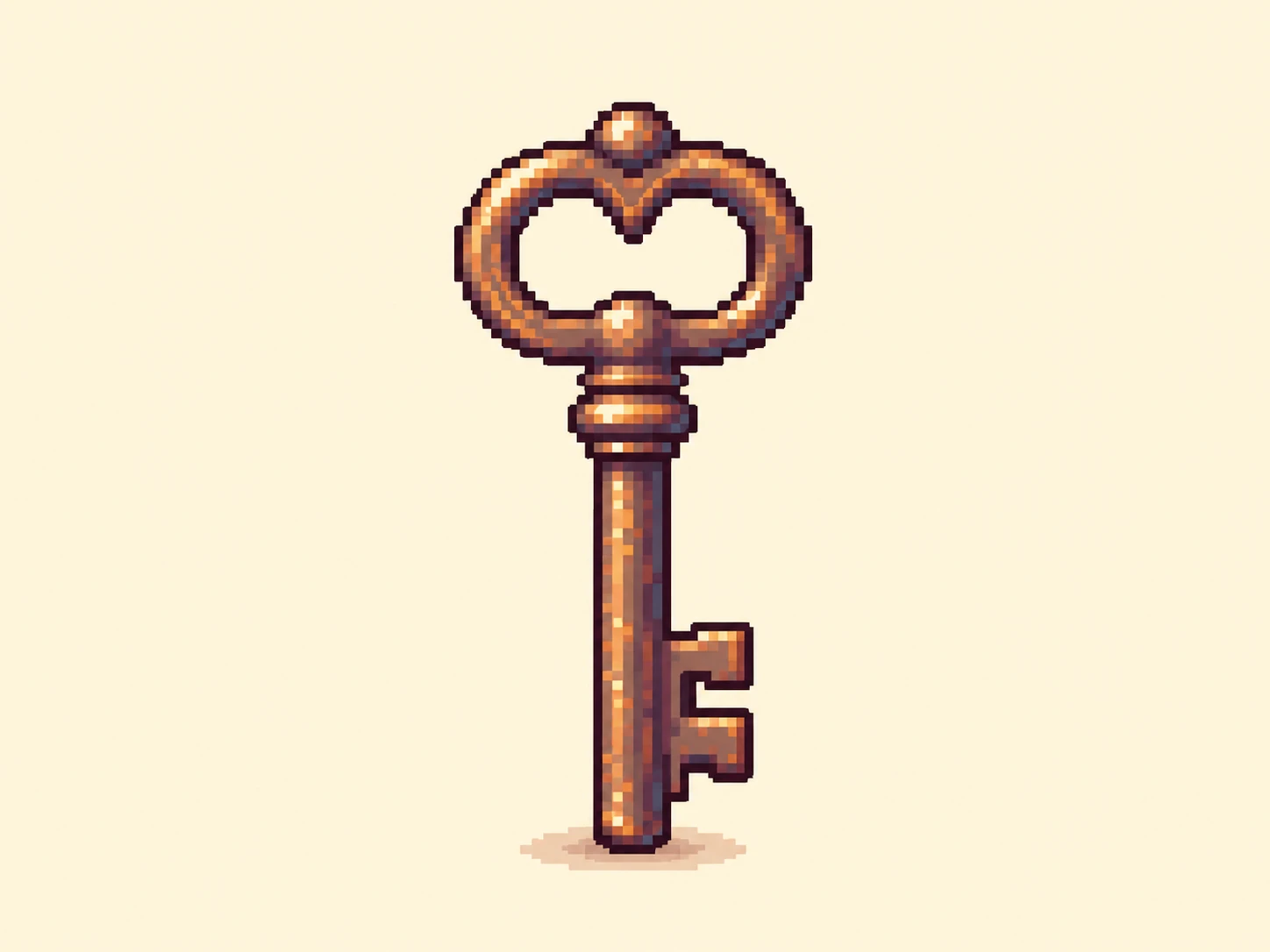
Hook, if you want a picture: "kii" sounds like "key," and キ looks like an old key held upright, two teeth cut near the top of the shaft. The "き with the tail removed" version is the one that stuck for me, because it costs no new memory, it just borrows a shape I already had.
Stroke path: two short strokes slanting down to the right, close to parallel, one above the other, then a long vertical straight down through both and past the bottom one. Three strokes. The vertical is the giveaway: it spears all the way through, unlike サ (sa), where the vertical is short and stops early.
Sound: "k" plus the "ee" from イ. Watch that the vowel stays a crisp "ee" and does not soften toward the "i" in "kit."
ク (ku)
ク (ku)
ク is the first character in the row with no easy anchor. It is a fragment of 久, and on its own it is just two strokes meeting at a sharp point, like an open beak or the corner of a less-than sign.
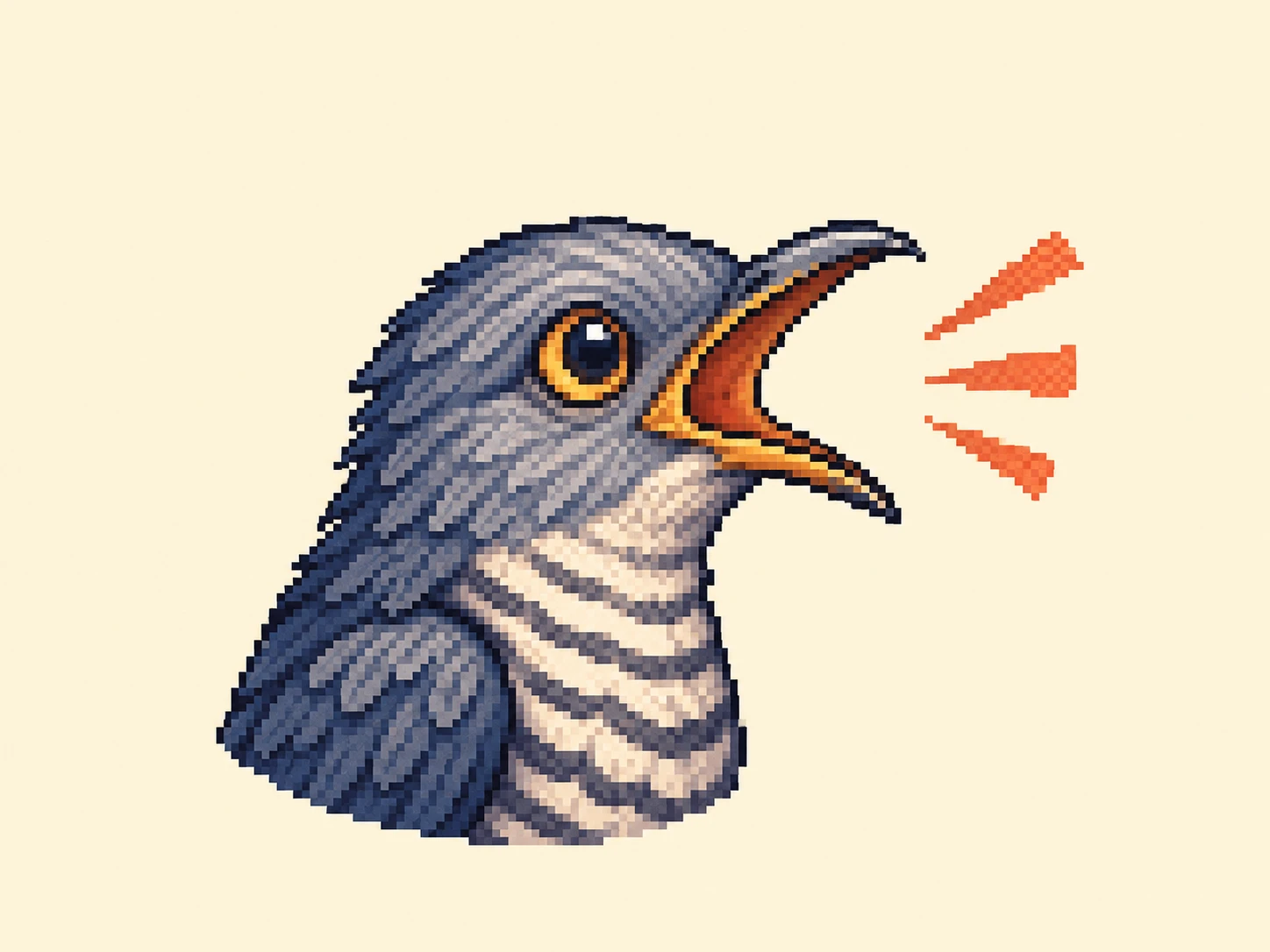
Hook: a cuckoo bird, beak open, calling "coo, coo." The point is the hinge of the beak, the two strokes are the upper and lower halves opening. Say "cuckoo" and you have both the sound and the picture in one word.
Stroke path: a short diagonal going down to the right, then from its end a long stroke sweeping down and to the left, ending in a slight hook. Two strokes, and no vertical anywhere. The absence of a vertical is exactly what separates ク from ケ, so pay attention to the fact that your pen never goes straight down here.
Sound: "k" plus the short "oo" from ウ. In fast or casual speech, a ク at the end of a word gets its "oo" squeezed almost to nothing, so a word ending in ク can sound like it just stops on the "k."
ケ (ke)
ケ (ke)
ケ is the other one that needs a real mnemonic. It is a fragment of 介, and it looks like a check mark with a vertical stroke dropped through it.
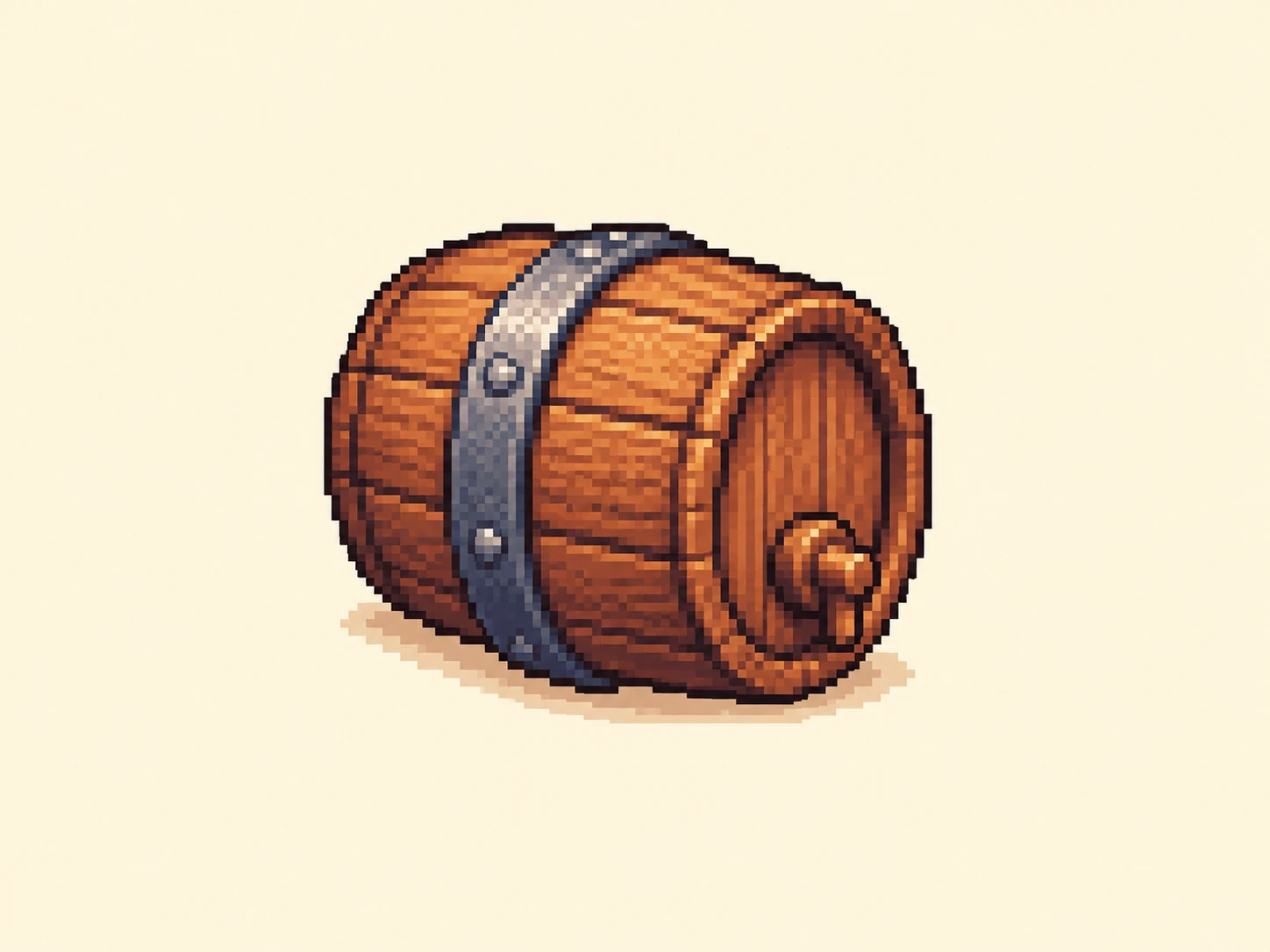
Hook: "ke" sounds like the start of "keg." Picture a keg on its side: the angled strokes are the curve of the barrel, the vertical is a band or the tap. It is not a strong image, but the sound match carries it, and there are only so many keg-shaped things to confuse it with.
Stroke path: a short stroke slanting down-left, a longer stroke from near its top slanting down-right, then a vertical dropped straight down through the join and past it. Three strokes. That third stroke, the vertical, is doing all the work of telling ケ apart from ク. If you ever hesitate between the two, ask one question: is there a line going straight down? Yes means ケ.
Sound: "k" plus the "eh" from エ. Flat and short, the same clean "eh" as "bed."
コ (ko)
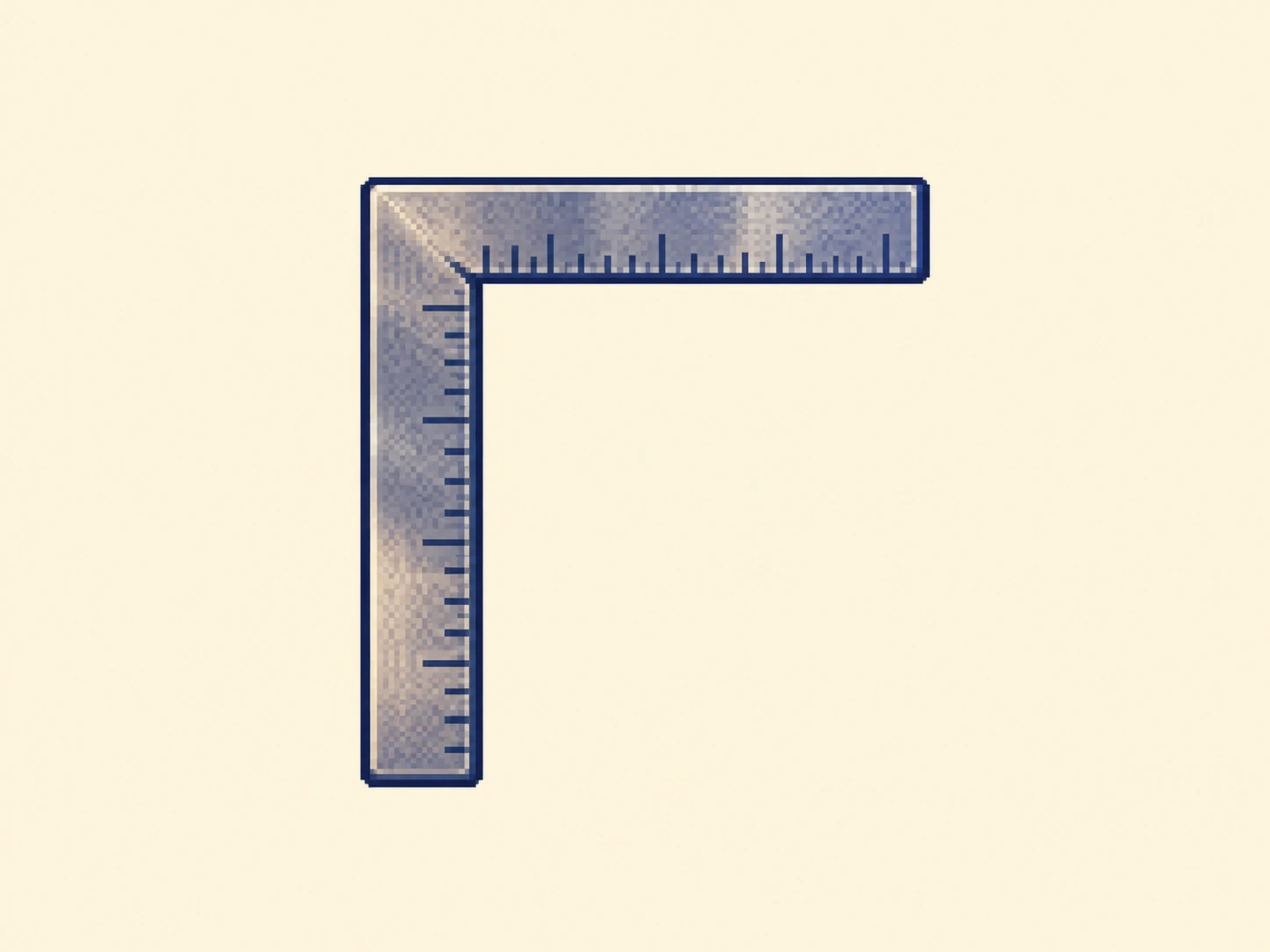
コ (ko)
コ is a fragment of 己, and it is the plainest character in the row: a top stroke and a bottom stroke joined on the left, open on the right, like a bracket or the corner of a box.
Hook: "co" as in "corner." It is a carpenter's set square, two edges meeting at a right angle, open to the right. Some people learn it as the mouth of a Pac-Man facing right, which works too.
Stroke path: one stroke across the top and bending straight down the left side, then a separate stroke across the bottom, starting from the left and running right. Two strokes. Keep the right side open. The moment you close it, you have written ロ (ro) instead.
Sound: "k" plus the "oh" from オ. You will see コ constantly, because コー (kō, a long "koh") starts a huge number of loanwords: コーヒー, コーラ, コート, コード.
These shapes come back
One reason to learn the K-row carefully is that its pieces reappear. カ is 力, which turns up as a component in dozens of kanji. コ's bracket shape is echoed in ユ (yu) and, closed off, in ロ (ro). キ shares its whole top half with the way サ (sa) is built. Katakana is a small, tightly recycled set of strokes, and the K-row introduces more of that shared vocabulary than any row except the vowels. Time spent here is not just five characters, it is a down payment on the next several rows.
The look-alikes that live here
- ク (ku) vs タ (ta). Both are a sharp angular shape. タ has an extra short slash inside the angle that ク does not. No slash means ク. タ is in the T-row.
- ク (ku) vs ケ (ke). ケ has the full vertical stroke dropped through it. ク has no vertical, just the two strokes meeting at a point.
- コ (ko) vs ロ (ro). コ is open on the right. ロ is a closed square. If all four sides are there, it is ロ, from the R-row.
- コ (ko) vs ユ (yu). ユ opens at the top and sits on a long base. コ opens to the side. Different openings.
- キ (ki) vs サ (sa). Both stack short strokes over a vertical. キ has a single long vertical spearing straight through two slanted strokes. サ has a short vertical and its crossbar sits lower. サ is in the S-row.
Reading real words
This is the row where the table stops being a stretch. Every word below is built only from the ten characters in Vowels and this article, plus the ー long-vowel bar.
| Word | Reading | Meaning |
|---|---|---|
| カキ | kaki | oyster; also persimmon |
| イカ | ika | squid |
| ココア | kokoa | cocoa |
| カカオ | kakao | cacao |
| キウイ | kiui | kiwi |
| ケーキ | kēki | cake |
| エコ | eko | eco, eco-friendly |
| カー | kā | car, as in レンタカー (rental car) |
ケーキ is worth saying out loud slowly. ケ, then the bar holding the "e" long, then キ. That is the exact rhythm of most loanwords: a syllable, often a long vowel, another syllable.
Try decoding two of them the slow way, one character at a time, before you let yourself read them as a whole:
- ココア. コ is "ko." コ again is "ko." ア is "a." ko-ko-a. Cocoa.
- キウイ. キ is "ki." ウ is "u." イ is "i." ki-u-i. Kiwi. Three characters, three beats, no consonant clusters, which is why Japanese borrows the word almost unchanged.
That character-by-character read feels slow and unnecessary now, with words this short. Do it anyway. It is the exact skill you will lean on later when the word is インターナショナル and you need to trust the system instead of guessing.
Drilling the K-row
Same approach as the vowels, with one addition. Because カ, キ, and コ come nearly free, put your reps into ク and ケ specifically. In Hirakata's Study mode, run the row, and every time ク or ケ comes up, write it once before flipping, asking yourself the "is there a vertical" question each time.
Then switch to Match mode with the vowels included so all ten characters are in play and you are forced to tell カ from ア and キ from イ at speed. If you can clear that board without slowing down, the row is solid. If you keep stalling on one pair, that pair is your homework for tomorrow, not the whole row.
Practice before moving on
Before the S-row, check that you can:
- Write all five K-row characters from memory, in order
- Tell ク and ケ apart by the dropped vertical
- Tell コ from a closed ロ, even though ロ is several articles away
- Read all eight practice words above at a normal pace, out loud
- Recognize カ next to ア and キ next to イ without hesitating
Where to go from here
The Katakana S-Row is next, and it contains the single worst look-alike pair in all of katakana, シ versus ツ, so it is worth arriving rested. For the hiragana version of this row, see Hiragana K-Row. The Understanding Katakana overview covers where the whole system is going. Drill カ, キ, ク, ケ, コ in Hirakata's Study and Match modes whenever you have a spare few minutes.