Every katakana row so far has had one or two look-alike pairs. The R-row has more collisions packed into five characters than any other row in the set. ラ leans on フ. ル has a whole レ hiding inside it. リ echoes イ. ロ is a twin of コ closed shut. None of this is a coincidence, exactly, it is what happens when a 46-character alphabet is built almost entirely from a handful of strokes: eventually a row comes along that inherits every leftover resemblance at once. This is that row.
The good news is that you have already met every character on the other side of these pairs. This article is mostly about sharpening distinctions you started drawing rows ago, not learning new ones.
Each of these five is a fragment of a kanji you will meet again later: ラ from 良 (yoi, good), リ from 利 (which shows up in 便利, benri, convenient), ル from 流 (nagareru, to flow), レ from 礼 (which shows up in お礼, orei, thanks), and ロ from 呂. None of them are common enough on their own to be worth memorizing right now, but the pattern holds: katakana keeps drawing from the same modest pool of everyday kanji, and every row you finish quietly stocks that pool a little further.
A note on the Japanese r-sound
Before the shapes: the sound. Japanese "r" is not the English "r," where the tongue pulls back and touches nothing, and it is not the English "l" either, where the tongue presses flat against the roof of the mouth. It is a quick flap of the tongue tip against the ridge just behind your top teeth, the same motion as the single-tap "r" in Spanish "pero" or the "tt" in how Americans say "butter" or "better." Every character in this row uses that flap. The audio on each one is the reference; aim for the tap, not either English sound.
ラ (ra)

ラ (ra)
ラ is フ with a short stroke floating above it, a fragment of 良. If フ is an empty hood folding forward, ラ is that same shape wearing a cap: the floating stroke on top is the brim.
Hook: フ, plus a hat.
Stroke path: a short stroke near the top, separate from the rest, then フ's single bent stroke below it. Two strokes total.
Sound: the flapped "r" plus the "ah" from ア.
リ (ri)
リ (ri)
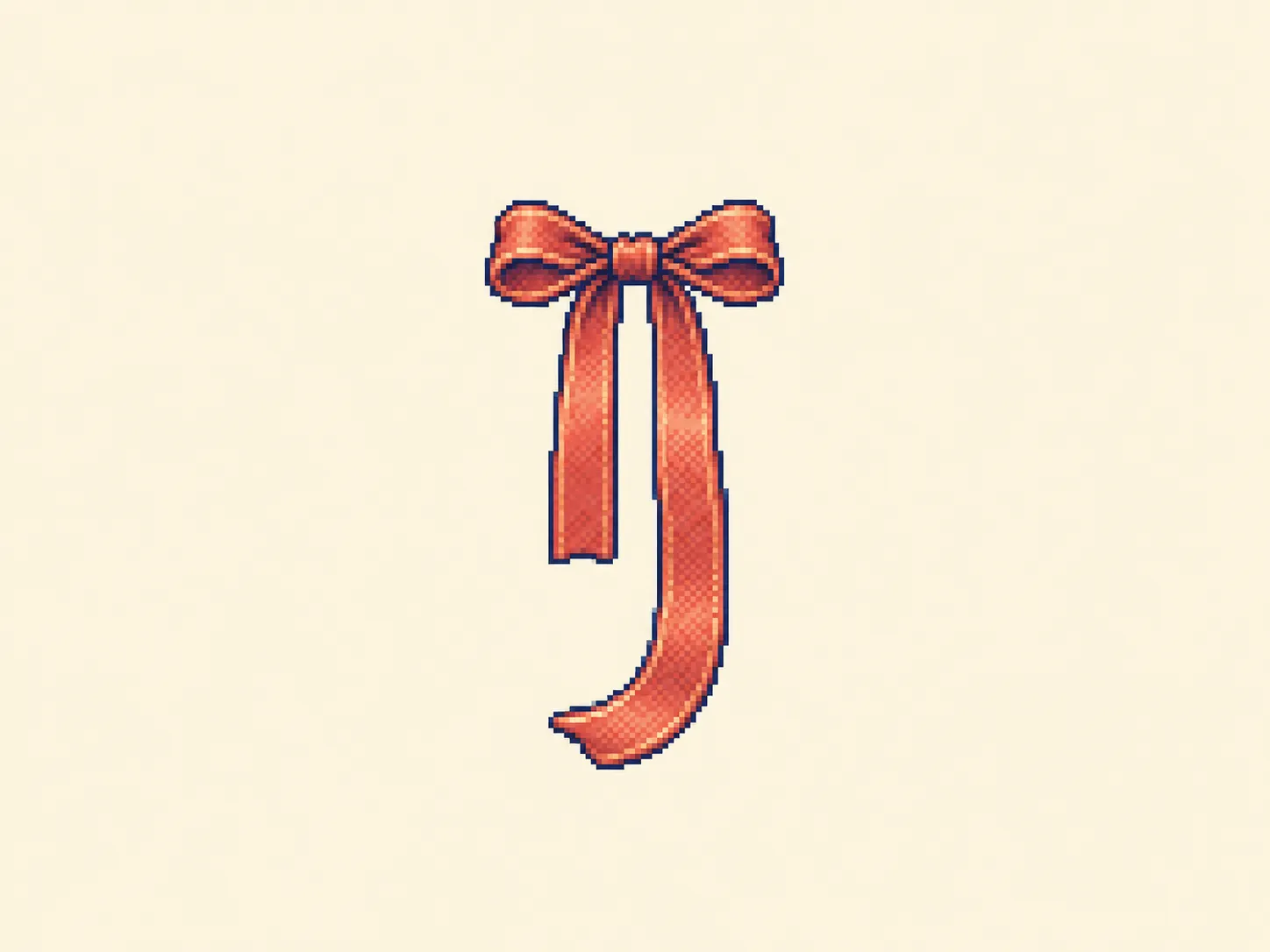
リ is two vertical strokes, close together, roughly parallel, a fragment of 利. Against イ: イ is one short diagonal tick plus one long diagonal stroke, clearly two different lengths and angles. リ is two strokes that are closer in both length and angle, more upright, less like a person leaning and more like two strands hanging side by side.
Hook: the two tails of a ribbon bow, hanging down side by side. The left tail is a little shorter, the right one longer, curling off to the left at the end. "Ri" as in "ribbon."
Stroke path: a short vertical stroke on the left, then a longer vertical stroke on the right that curves off toward the lower left as it finishes. Two strokes.
Sound: the flapped "r" plus the "ee" from イ.
ル (ru)

ル (ru)
ル is a fragment of 流, two strokes standing side by side: on the left, a stroke that drops and curves away to the lower left, and on the right, a long vertical that turns at the bottom and kicks up to the right. That right-hand stroke is, on its own, exactly レ.
Hook: roots. Pull a seedling out of the ground and you see two roots, one trailing off to the left, the other running straight down and curling back up at the tip. "Ru" as in "root."
Stroke path: the left stroke first, starting at the top and curving down and away to the lower left. Then the right stroke, starting a little higher, running straight down, and turning at the bottom into a flick up and to the right. Two strokes. Keep the two apart with a clear gap between them, like two legs, so the left stroke never reads as part of the right one.
Sound: the flapped "r" plus the short "oo" from ウ.
レ (re)

レ (re)
レ is a fragment of 礼, and it is a lopsided checkmark, drawn backwards from the usual proportions: a long stroke down, turning at the bottom into a short flick up and to the right.
Hook: a checkmark on a form. "Re" as in "reviewed and approved."
Stroke path: start at the top left and go straight down, then without lifting the pen, turn at the bottom and sweep up and out to the right. One stroke. Keep the proportions of the mnemonic: the downstroke is the long part, so let it run most of the character's height, and make it straighter and more upright than the image's slant. Nothing standing to its left, which is exactly the feature that separates it from ル.
Sound: the flapped "r" plus the "eh" from エ.
ロ (ro)
ロ (ro)
ロ is a fragment of 呂, and it happens to land on exactly the same shape as the kanji 口 (kuchi, "mouth"), a closed square. Coincidence again, like メ and 目 back in the M-row, but a useful one: 口 shows up constantly, in 入口 (iriguchi, entrance) and 出口 (deguchi, exit) among many others, so ロ's shape is a small head start on reading those later.
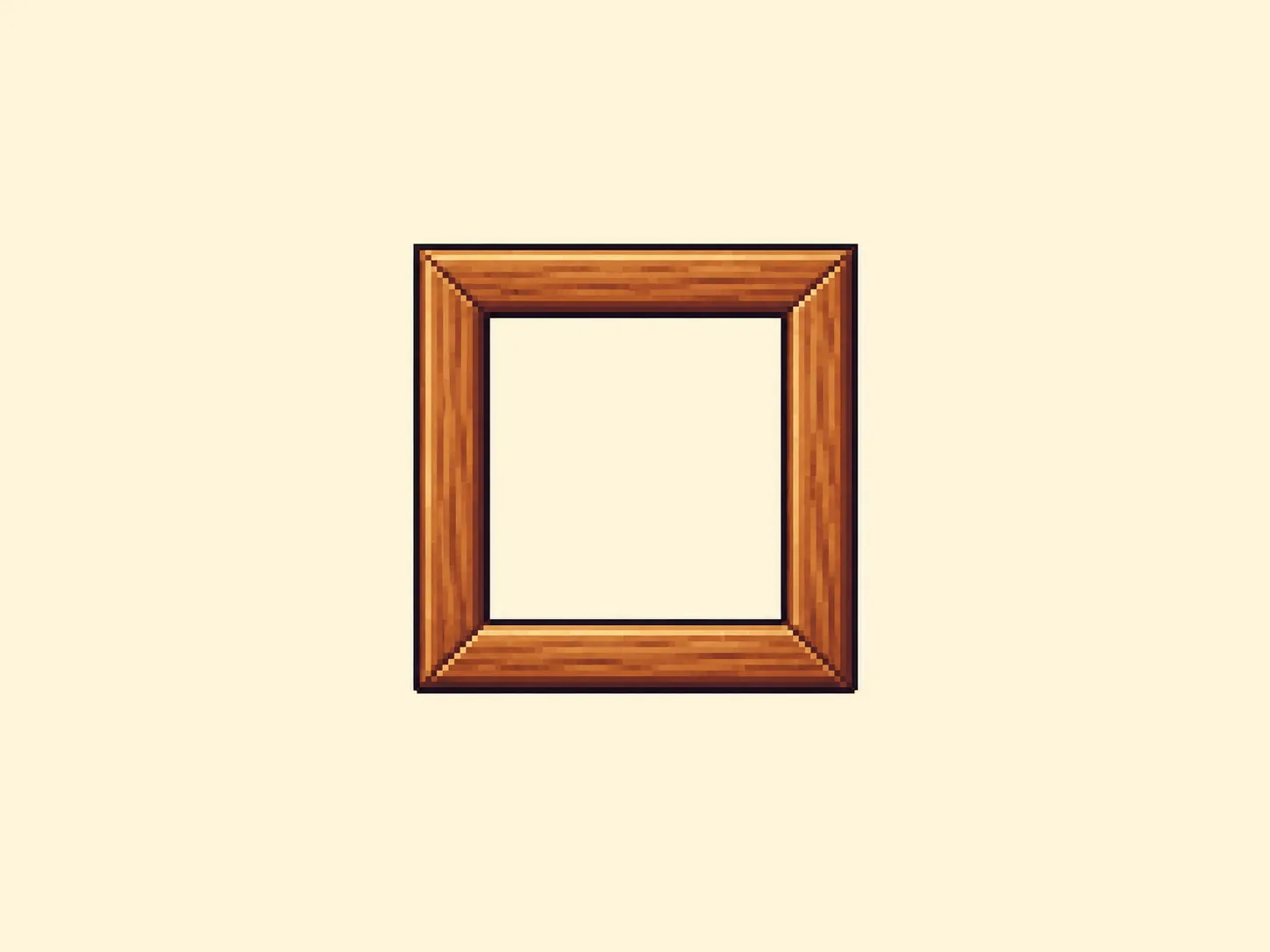
Hook: a plain square picture frame, all four sides closed.
Stroke path: the left side straight down first. Then the top, across and bending down the right side. Then the bottom, left to right, closing the box. Three strokes, the same order as the kanji 口, forming a fully closed box, unlike コ, which is only the second and third of those strokes and stays open on the left.
Sound: the flapped "r" plus the "oh" from オ.
The look-alikes that live here
This row earns its own recap table, because it has more internal collisions than any other:
- ル (ru) vs レ (re). ル is レ with an extra stroke standing to its left. Two strokes, two legs: ル. One stroke on its own: レ.
- ロ (ro) vs コ (ko). ロ is a fully closed square, four sides. コ (from the K-row) is missing its left side, so it stays open on the left. Closed means ロ.
- ラ (ra) vs フ (fu). A floating stroke on top means ラ. Bare, no hat, means フ, from the H-row.
- リ (ri) vs イ (i). Two strokes close in length and angle, both fairly upright: リ. One short tick and one long diagonal, clearly mismatched: イ, from the vowels article.
- レ (re) vs ヒ (hi). Both have a stroke that drops and then turns right at the bottom. ヒ adds a second, short stroke rising to the right across its middle, and its bottom runs out flat. レ is that single stroke alone, and its bottom kicks up at an angle. Extra crossing stroke is ヒ, bare stroke is レ.
Reading real words
Forty-three characters now, three short of the full set. Every word below uses only Vowels and the K, S, T, N, H, M, Y, and R-rows, plus the ー bar.
| Word | Reading | Meaning |
|---|---|---|
| カレー | karē | curry |
| タオル | taoru | towel |
| ホテル | hoteru | hotel |
| クリーム | kurīmu | cream |
| コーラ | kōra | cola |
| カラス | karasu | crow |
| リス | risu | squirrel |
| サムライ | samurai | samurai (in a modern, stylized, or foreign-facing context) |
カレー is a good one to slow down on: カ, レ, then a long bar. Say it with the real flapped "r" in レ rather than an English "l," and it stops sounding like "kah-lay" and starts sounding like the word Japanese speakers actually use. サムライ is worth decoding fully: サ-ム-ラ-イ, four characters spanning four different rows you have learned across this entire series.
Two more the slow way:
- タオル. タ is "ta." オ is "o." ル is "ru." ta-o-ru. Towel. No consonant cluster to break up here, English "towel" already has a vowel between its two consonant sounds, so the mapping onto katakana is almost one-to-one.
- クリーム. ク is "ku." リ is "ri." ー holds it long. ム is "mu." ku-rī-mu. Cream. The English "cr-" cluster becomes "ku-ri-," and the long vowel absorbs where the "ea" spelling would go. By now this vowel-insertion pattern should feel automatic to spot rather than something you have to work out.
Drilling the R-row
This is a row where speed comes from repetition, not insight, because the differences are small and physical rather than conceptual. Write ル and レ side by side, ten times each, narrating "two" or "one" as you finish each one. Do the same for ロ and コ, saying "closed" or "open." Then run a full Match round mixing this row with フ, イ, ヒ, and コ, the four characters everything here leans on, and do not move to the final characters until you can clear that board at a steady pace without stalling on any single pair.
It is worth being honest about how long this takes. Every other row in this series has had one hard pair at most. This one has four, stacked on top of each other, and rushing it just means you carry five characters' worth of hesitation into every word you try to read afterward. Two or three focused sessions here is a reasonable investment, not a sign you are behind.
Practice before moving on
Before the final characters, check that you can:
- Write all five R-row characters from memory, in order
- Produce the flapped Japanese "r" rather than an English r or l
- Tell ル from レ by the stroke count, and ロ from コ by the closed side
- Tell ラ from フ and リ from イ without pausing
- Read all eight practice words above at a normal pace
Where to go from here
The final characters, ワ, ヲ, and ン, close out the full 46-character katakana set, and ン is the fourth and last member of the シ/ツ/ソ/ン family you started tracking back in the S-row. For the hiragana version of this row, see Hiragana R-Row, which has the same flapped-r explanation and its own internal look-alikes. Drill ラ, リ, ル, レ, ロ in Hirakata's Study and Match modes, with フ, イ, ヒ, and コ switched on.