The first katakana word I ever read in the wild was アイス (aisu, ice cream), on a sign outside a convenience store in Kyoto. I knew every sound in it. I had drilled あ and い in hiragana weeks before. And I still stood there for a good three seconds before it clicked. That pause is the whole problem with katakana vowels, and it is worth understanding before you memorize a single shape.
You already own these five sounds. あ, い, う, え, お are probably the most solid characters you know. Katakana asks you to attach those exact sounds to five new shapes made of straight lines and hard angles, with none of the round, looping feel hiragana has. Your brain keeps insisting it already knows this row. It knows the sounds. It does not know ア, イ, ウ, エ, オ yet, and pretending otherwise is what causes the stall.
So treat this as five brand-new characters. The payoff is real. Katakana is how Japanese writes tens of thousands of borrowed words, and the vowels are the frame every one of them hangs on.
Why this row is harder than it looks
With hiragana, every character was foreign. You had no prior associations to fight, so a mnemonic could walk straight in. Katakana vowels are different. Each one collides with something you already know, either the matching hiragana or a Latin letter it half-resembles, and those collisions cut both ways. ア looks a little like a capital A, which helps. エ looks like a capital I, which also helps. But イ looks like a lowercase L or a stray tick, ウ looks like nothing in English at all, and オ looks like a garden rake. The trick is to lean on the resemblances that are actually true and ignore the ones that will mislead you.
The true ones come from history. Hiragana was made by taking a whole kanji and writing it in fast cursive until it smoothed into a single flowing shape. Katakana was made differently. A monk in a hurry would grab one piece of a kanji, a corner, a radical, the top three strokes, and use that fragment to stand for the sound. That is why katakana looks chopped: every character is a cut corner of something bigger. Knowing which corner is the most reliable memory hook there is, because it is not a story someone invented, it is where the shape literally came from.
ア (a)
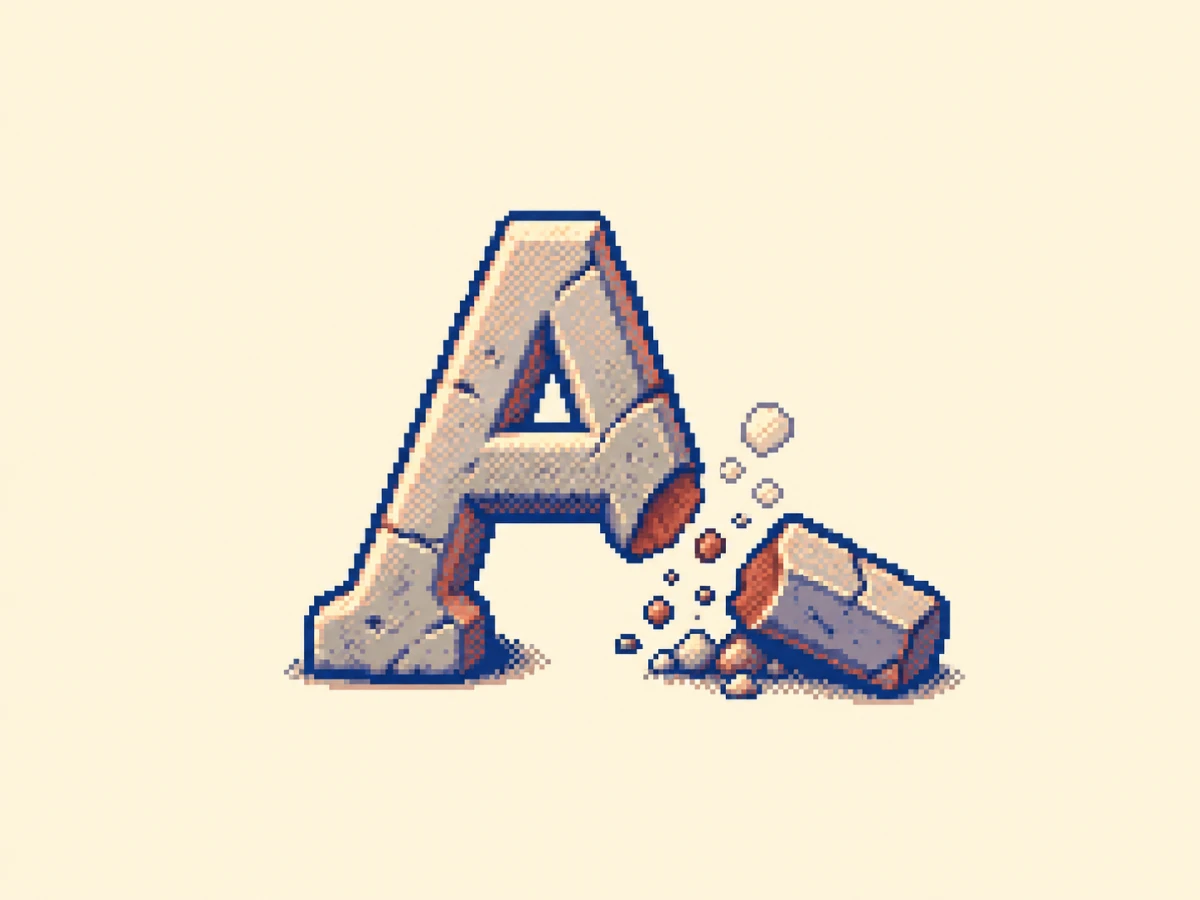
ア (a)
The hook most people use, and the one I use: ア is a capital A that has lost its right leg. The peak and the left leg are still standing, the crossbar is still there, the right leg has snapped off. "A" for the letter, "ah" for the sound.
The fragment it comes from is 阿, and specifically the left side of it, the つくり on the left that looks like a squared-off ear. You will see that same piece in kanji later. For now, the broken capital A is enough.
Stroke path: a short diagonal flick at the top left, then one long diagonal sweeping from the top down to the lower right, ending in a small hook back to the left. Two strokes.
Sound: identical to あ, the "a" in "father" or "spa." Never the "a" in "cat," which does not exist in Japanese.
イ (i)
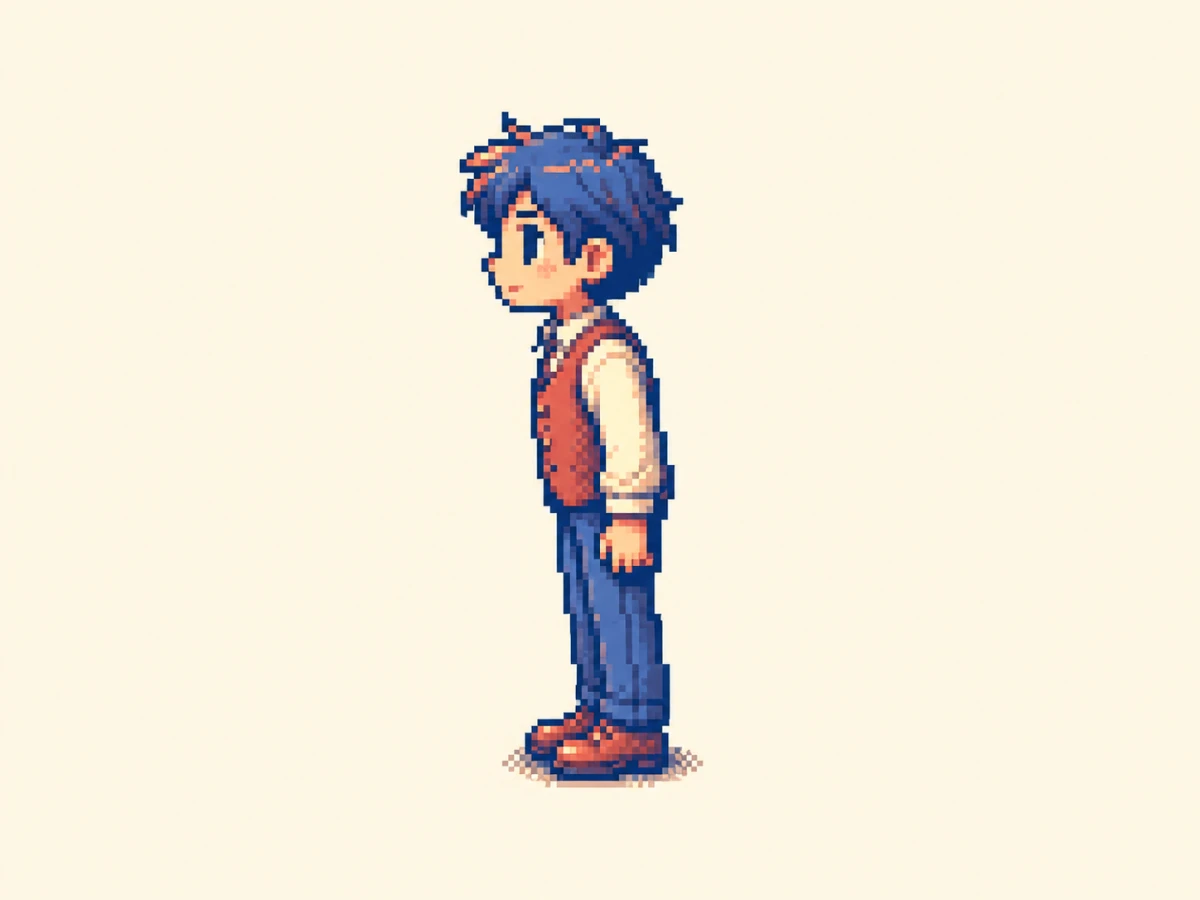
イ (i)
イ is a person. Not a made-up story, a fact: it is the fragment taken from 伊, and it is identical to 亻, the "person" radical that appears on the left side of hundreds of kanji (人 as a component). A short stroke leaning off the top, one long stroke dropping down: a figure standing, tilted slightly forward. "He" is a person, and "he" starts close enough to the "ee" sound to pull it along.
If the person does not stick, the backup is a lowercase letter "i" that lost its dot and got knocked off balance.
Stroke path: a short stroke falling to the left near the top, then a long stroke falling from the top down through the middle. Two strokes.
Sound: identical to い, "ee" as in "see." Never the short "i" in "sit."
ウ (u)
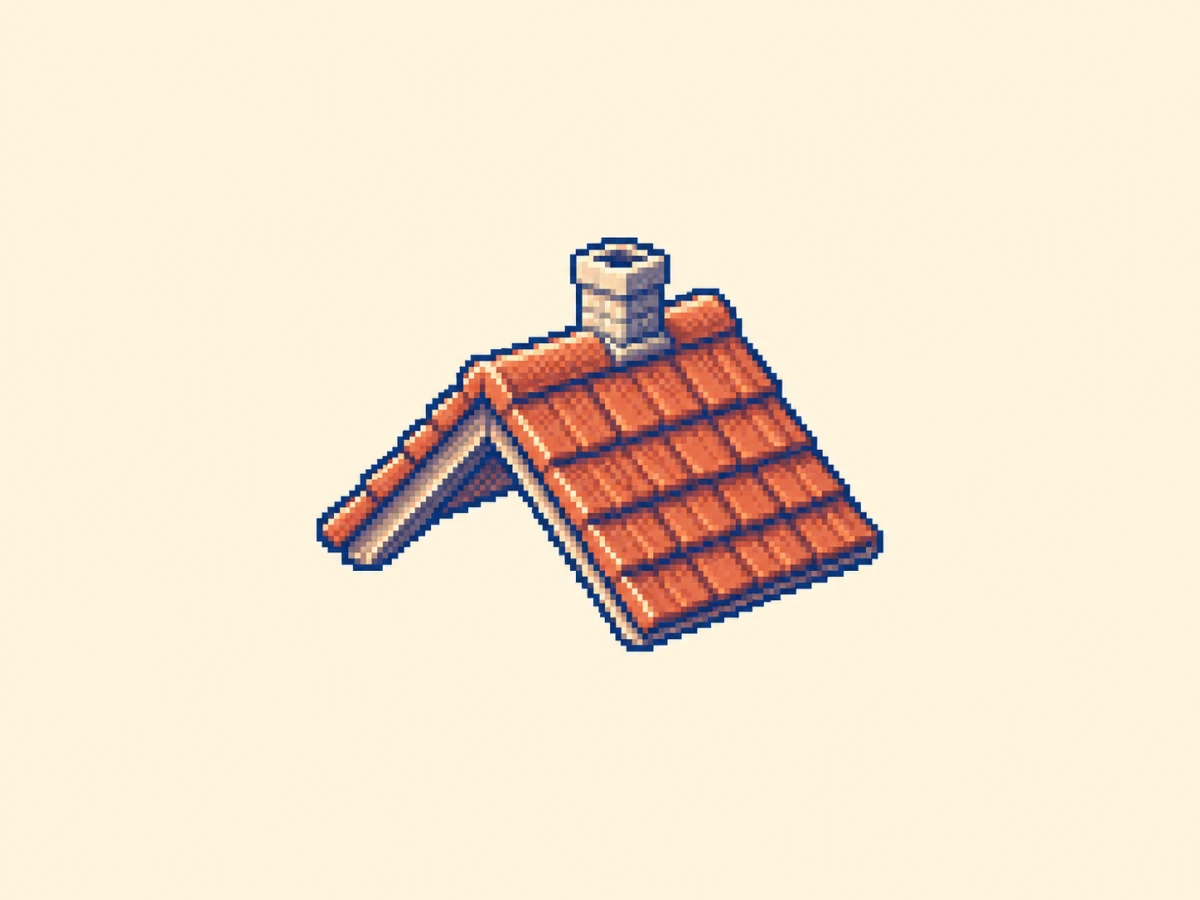
ウ (u)
ウ is a roof. It is the top of 宇, and that top piece is the うかんむり radical, the "roof" that sits over kanji like 家 (house) and 室 (room). A little chimney stub on the ridge, two eaves sloping down, nothing underneath. The radical is even nicknamed after this character, so the shape and the name reinforce each other.
For the sound, picture someone ducking under a low roof and going "oof." Clipped, not drawn out.
Stroke path: a short vertical tick at the very top, then a stroke that goes across and turns down the left side, then a longer stroke curving down the right and hooking left at the bottom. Three strokes.
Sound: identical to う, close to the "oo" in "food" but shorter, with barely any lip rounding.
エ (e)
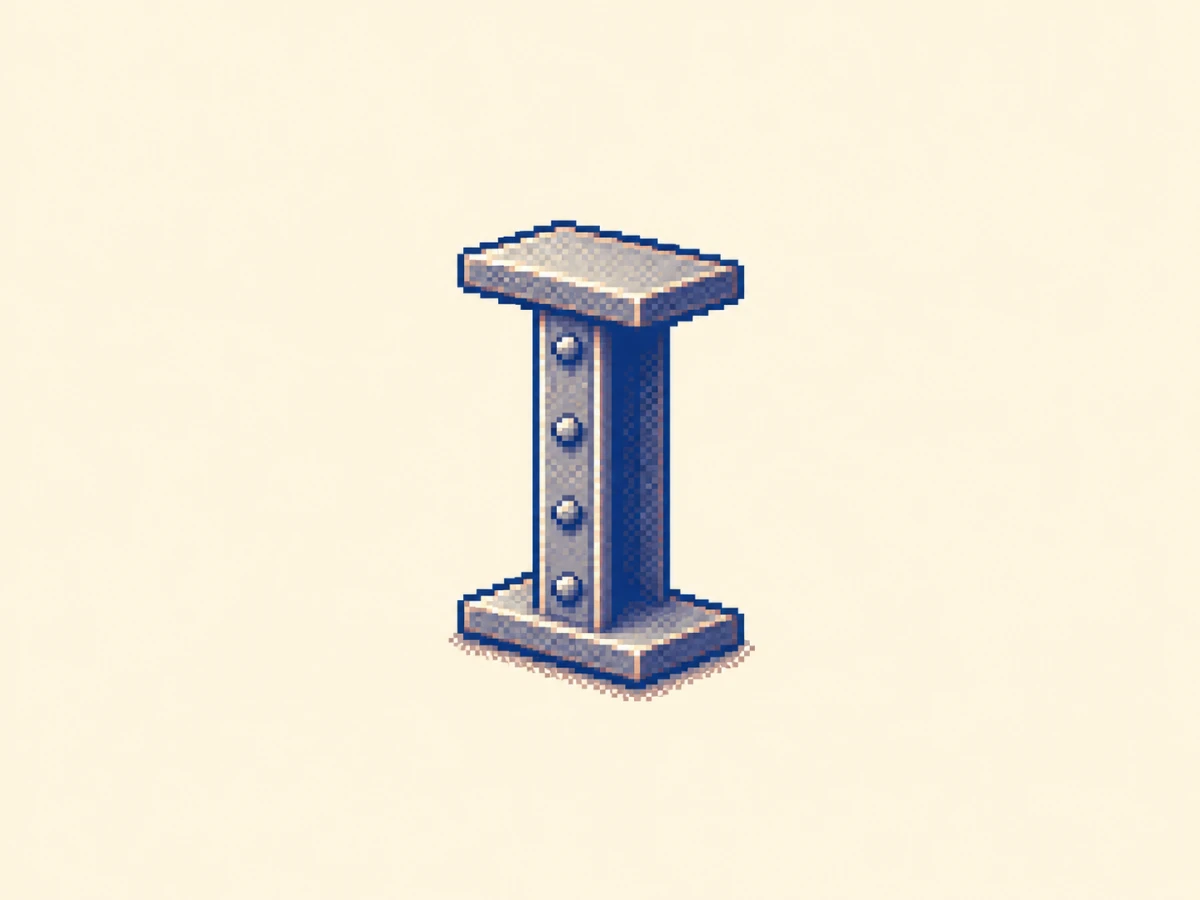
エ (e)
エ is the easiest of the five, because it is not a fragment of a kanji, it is a whole one: 工, the kanji for "work" or "craft," pronounced kō. Same three strokes, same shape, no simplification at all. Two horizontal bars joined by a vertical, exactly a capital I the way it is drawn on a blueprint, or a steel I-beam standing on end.
The letter I gets you most of the way, and "engineering" starts with the "e" sound and is the kind of work 工 means.
Stroke path: top horizontal, then the vertical down the middle, then the bottom horizontal. Three strokes, top to bottom.
Sound: identical to え, "eh" as in "bed." Flat, no glide, none of the "ay" slide English "e" often has.
オ (o)
オ (o)
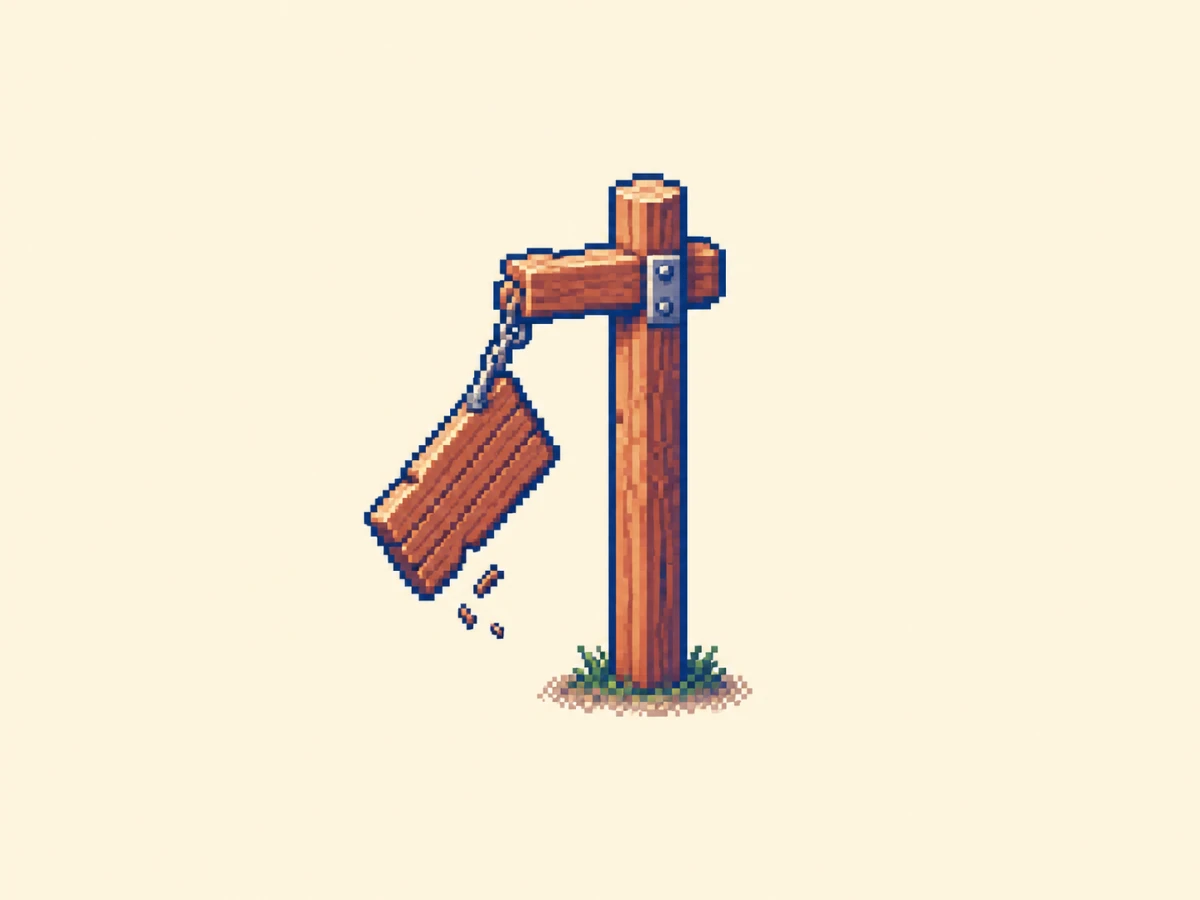
オ has the weakest outside resemblance of the five, so the best hook is one you already carry: it is お with the loop cut off. Both come from the same source kanji, 於. Line them up. お has a short cross stroke near the top, a curved vertical, and a fat closed loop at the bottom right. オ has the same cross stroke, the same vertical, and where お loops around, オ just has a short curl that never closes. Same skeleton, no belly.
If you want a picture instead, it is a signpost: a crossbar near the top, a tall post, and one arm that has come loose and swings down to the left.
Stroke path: the short horizontal near the top, then a long vertical down through it, then a curved stroke sweeping from the upper area down to the lower left. Three strokes.
Sound: identical to お, "oh" as in "go," but shorter and more clipped than the English version.
The look-alikes that start here
Hiragana's one confusing vowel pair was あ versus お. In katakana that pair is fine. Three different clashes begin in this row, and it is worth meeting them now even though the other halves come later:
- ア vs マ (ma). Both are two strokes with a diagonal sweeping down to the right. The tell is the first stroke: ア starts with a short diagonal flick set high and clear of the rest, マ starts with a full horizontal line straight across the top. Flick means ア, bar means マ. マ is from the M-row, a few articles away.
- ウ vs ワ vs ク. All three share a similar angular body with a hook. ウ is the only one wearing the little chimney tick on top. Tick means ウ. ワ (wa) turns up in the final characters and ク (ku) in the K-row.
- ア vs ノ (no), hiding inside ア itself. That long down-right diagonal in ア is, on its own, the whole of ノ. Once you can see ノ inside ア, you have half of the N-row already, and you are less likely to misread a lone ノ as a broken ア.
Then there is the trap I opened with. You know あいうえお cold, and that certainty is exactly what makes ア, イ, ウ, エ, オ stall you. If you catch yourself thinking "I already know this row," that is the signal to slow down, not speed up.
The ー you will see stuck to these
One katakana-only mark shows up the moment you start reading loanwords: ー, a plain horizontal bar called chōonpu. It means "hold the vowel before it for one more beat." コーヒー (kōhī, coffee) is not ko-o-hi-i, it is "koh" held long, then "hee" held long. In hiragana a long vowel is written by adding an actual vowel character (おかあさん). Katakana just draws the bar. You will see it constantly, often right after one of the five characters from this article, so start noticing it now: ア plus ー is a long "aa," エ plus ー is a long "ee," and so on. The full rules get their own article later in the series.
Reading real words
Here is the honest part. Almost no Japanese words are written in vowels alone, because katakana exists for loanwords and loanwords need consonants. So unlike the hiragana vowels, you cannot read a full sentence yet. What you can do is pick out the vowel characters inside words you already half-recognize, and a few real words genuinely are all vowels.
| Word | Reading | Meaning |
|---|---|---|
| アイ | ai | love; also "eye" and "AI" |
| エア | ea | air, as in エアコン (air conditioner) |
| ウエア | uea | wear, apparel, as in スポーツウエア (sportswear) |
| エイ | ei | stingray |
| アウト | auto | "out," in baseball and for out of bounds |
| アイス | aisu | ice cream |
| イエス | iesu | "yes" |
| オアシス | oashisu | oasis |
アイス is the one to hold onto. It is one of the first katakana words most people read on their own, and by the end of the S-row you will have every character in it.
How to drill this row
Five characters is a small enough set to over-practice, which is a mistake. Twenty focused minutes beats an hour of grinding. What worked for me:
1. Write each one three times while saying the sound out loud. The hand and the voice together lock it in faster than either alone.
2. Recognize before you recall. In Hirakata's Study mode, flip through ア, イ, ウ, エ, オ and just name each sound. Speed matters more than getting a streak.
3. Mix in the hiragana twins as distractors. Match mode with both scripts on forces you to actually look at the shape instead of guessing from position.
4. Come back tomorrow, not in an hour. One short session today and another tomorrow will beat three sessions this afternoon. The gap is doing the work.
Practice before moving on
Before starting the K-row, make sure you can:
- Write all five katakana vowels from memory, in order
- Recognize them out of order, shuffled in with their hiragana twins
- Tell ア from マ by the first stroke, flick versus bar, even though マ is still a few articles away
- Say the right sound the instant you see the character, checking yourself against the audio
- Read the eight practice words above without decoding them one character at a time
If ア and オ feel shaky, spend another day here. Every following row is these five shapes with a consonant attached, so vowel confusion now becomes whole-row confusion later.
Where to go from here
The Katakana K-Row is next: the same five vowel sounds with a "k" in front, and the first row where real loanwords open up. To see how far the shapes drift from the round hiragana versions, read Hiragana Vowels side by side with this one. For the full picture of what katakana is for and how the confusing pairs stack up, Understanding Katakana is the overview. When you are ready to drill, Hirakata's Study and Match modes have ア, イ, ウ, エ, オ ready to go.