Understanding Katakana
Understanding Katakana
Katakana is the second phonetic writing system in Japanese, sharing the same 46 basic sounds as Hiragana but with distinctly different, more angular visual forms.
What is Katakana?
Katakana characters represent the same sounds as Hiragana but are used for completely different purposes. While Hiragana is used for native Japanese words, Katakana has specific uses:
- Foreign Words: Words borrowed from other languages (コーヒー - coffee, パン - bread)
- Loanwords: Modern terms adapted from English and other languages
- Foreign Names: Your name will likely be written in Katakana
- Onomatopoeia: Sound effects in manga and anime (ドキドキ - doki doki, heartbeat)
- Emphasis: Similar to italics or bold in English
- Technical Terms: Scientific and technical vocabulary
- Company Names: Many Japanese brands use Katakana
- Animal and Plant Names: Scientific names are often written in Katakana
Katakana vs Hiragana
Both systems represent the same sounds, but:
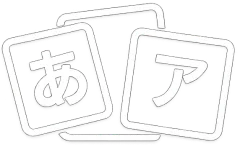
- Hiragana: Curved, flowing characters (あいうえお)
- Katakana: Angular, straight characters (アイウエオ)
Think of it like uppercase and lowercase letters in English - same sounds, different appearance and purpose.
The 46 Basic Katakana Characters
Katakana follows the same structure as Hiragana:
- Vowels: ア (a), イ (i), ウ (u), エ (e), オ (o)
- K-row: カ (ka), キ (ki), ク (ku), ケ (ke), コ (ko)
- S-row: サ (sa), シ (shi), ス (su), セ (se), ソ (so)
- T-row: タ (ta), チ (chi), ツ (tsu), テ (te), ト (to)
- N-row: ナ (na), ニ (ni), ヌ (nu), ネ (ne), ノ (no)
- H-row: ハ (ha), ヒ (hi), フ (fu), ヘ (he), ホ (ho)
- M-row: マ (ma), ミ (mi), ム (mu), メ (me), モ (mo)
- Y-row: ヤ (ya), ユ (yu), ヨ (yo)
- R-row: ラ (ra), リ (ri), ル (ru), レ (re), ロ (ro)
- W-row: ワ (wa), ヲ (wo), ン (n)
Stroke Order and Writing Katakana
Katakana follows similar stroke order principles to Hiragana, but with straighter, more angular strokes:
Key Differences in Writing
1. Angular Strokes: Katakana uses sharp angles instead of curves
2. Fewer Strokes: Some Katakana characters have fewer strokes than their Hiragana counterparts
3. Straight Lines: Many characters are composed primarily of straight lines
Stroke Order Examples
- ア (a): 2 strokes - Diagonal line, then horizontal stroke
- カ (ka): 2 strokes - Horizontal line, then vertical stroke with hook
- キ (ki): 3 strokes - Horizontal, vertical, then diagonal
- ス (su): 2 strokes - Two diagonal lines from top left to bottom right
- ツ (tsu): 3 strokes - Three short diagonal strokes
- シ (shi): 3 strokes - Similar to ツ but more vertical
Commonly Confused Pairs
- ソ (so) vs ン (n): ソ starts horizontally, ン starts vertically
- シ (shi) vs ツ (tsu): シ is more vertical, ツ is more horizontal
- ノ (no) vs メ (me): ノ is one stroke, メ has two strokes
Visual Mnemonics for Katakana
Katakana's angular shapes lend themselves to geometric mnemonics:
Vowel Mnemonics
- ア (a): Like the letter "A" without the crossbar
- イ (i): Two chopsticks standing upright
- ウ (u): Looks like a smile or "u"-shape
- エ (e): An elevator "E" going sideways
- オ (o): Someone saying "Oh!" with three strokes
Consonant Mnemonics
- カ (ka): A karate chop (sharp angle)
- キ (ki): A key with two teeth
- ク (ku): A sideways "C" for coo
- タ (ta): Someone doing ta-da! with one arm up
- ト (to): A totem pole
- ノ (no): A "no" slash mark
- フ (fu): A fun slide going down
- マ (ma): A maple leaf grid
- ム (mu): A moo-ing cow's horns
- ロ (ro): A robot's square mouth
Real Japanese Words Using Katakana
Once you know some Katakana, you can read tons of familiar words! Many English words are used in Japanese:
Food and Drink
- コーヒー (kōhī) - coffee
- パン (pan) - bread (from Portuguese)
- ケーキ (kēki) - cake
- アイス (aisu) - ice cream
- ハンバーガー (hanbāgā) - hamburger
- ピザ (piza) - pizza
- チョコレート (chokorēto) - chocolate
- ビール (bīru) - beer
- ワイン (wain) - wine
- サンドイッチ (sandoitchi) - sandwich
Technology
- テレビ (terebi) - TV
- コンピューター (konpyūtā) - computer
- スマホ (sumaho) - smartphone (shortened)
- インターネット (intānetto) - internet
- メール (mēru) - email
- カメラ (kamera) - camera
- ゲーム (gēmu) - game
- アプリ (apuri) - app
Places and Travel
- レストラン (resutoran) - restaurant
- ホテル (hoteru) - hotel
- タクシー (takushī) - taxi
- バス (basu) - bus
- エレベーター (erebētā) - elevator
- スーパー (sūpā) - supermarket
Countries and Cities
- アメリカ (amerika) - America
- イギリス (igirisu) - England
- オーストラリア (ōsutoraria) - Australia
- ニューヨーク (nyūyōku) - New York
- ロンドン (rondon) - London
- パリ (pari) - Paris
Common Sound Effects (Onomatopoeia)
- ドキドキ (dokidoki) - heartbeat sound (excitement)
- キラキラ (kirakira) - sparkling, twinkling
- ピカピカ (pikapika) - shiny, sparkling
- ゴロゴロ (gorogoro) - rumbling, rolling
- ワンワン (wanwan) - dog barking
- ニャー (nyā) - cat meowing
Writing Your Name in Katakana
One of the most practical uses of Katakana is writing foreign names. Here are some examples:
- John → ジョン (jon)
- Mary → メアリー (mearī)
- David → デビッド (debiddo)
- Sarah → サラ (sara)
- Michael → マイケル (maikeru)
- Emily → エミリー (emirī)
Japanese approximates foreign sounds using available Katakana combinations, which is why some names sound different than the original.
Learning Strategy
Since Katakana uses the same sounds as Hiragana:
1. Master Hiragana First: Learn one system thoroughly before starting the other
2. Compare Side-by-Side: Notice the differences between corresponding characters
3. Focus on Confusing Pairs: Pay special attention to シ/ツ and ソ/ン
4. Practice with Real Words: Use English loanwords you already know
5. Use the Hirakata app: Switch between Hiragana and Katakana decks
6. Read Menus: Japanese restaurant menus often use lots of Katakana
7. Watch Anime/Manga: Sound effects are great Katakana practice
Tips for Success
- Focus on Angles: Katakana's angular nature makes it different from Hiragana's curves
- Practice Writing: The straight lines can be easier for some learners
- Use Context: Katakana words in text are usually foreign or emphatic
- Learn Common Patterns: Many English endings have standard Katakana equivalents
- Download Practice Sheets: Use our free printable Katakana charts
- Quiz Yourself: Test your knowledge with the Quiz mode
Common Katakana Patterns
Understanding these patterns helps you read new words:
- Long Vowels: Marked with ー (chōonpu)
- Example: コーヒー (kō-hī) not コヒ
- Small ッ: Doubles the following consonant
- Example: ベッド (beddo) - bed
- Small ャ, ュ, ョ: Create contracted sounds
- Example: シャワー (shawā) - shower
Moving Forward
Once comfortable with basic Katakana, explore:
- Dakuten and Handakuten: Modified Katakana characters (ガ, バ, パ)
- Contracted Sounds: Combination Katakana characters
- Reading Practice: Start reading Japanese product labels and menus
- Your Name: Practice writing your own name in Katakana
- Foreign Words: Try converting English words to Katakana
For more learning strategies, check out our Effective Learning Tips article!
Remember: Katakana might seem harder at first because the characters are more angular, but many learners find it easier once they get used to it. The best part? You already know thousands of Katakana words - they're just English words written in Japanese!